Former Akal Takht Leader Issues Stark Warning on Sacrilege Mishandling
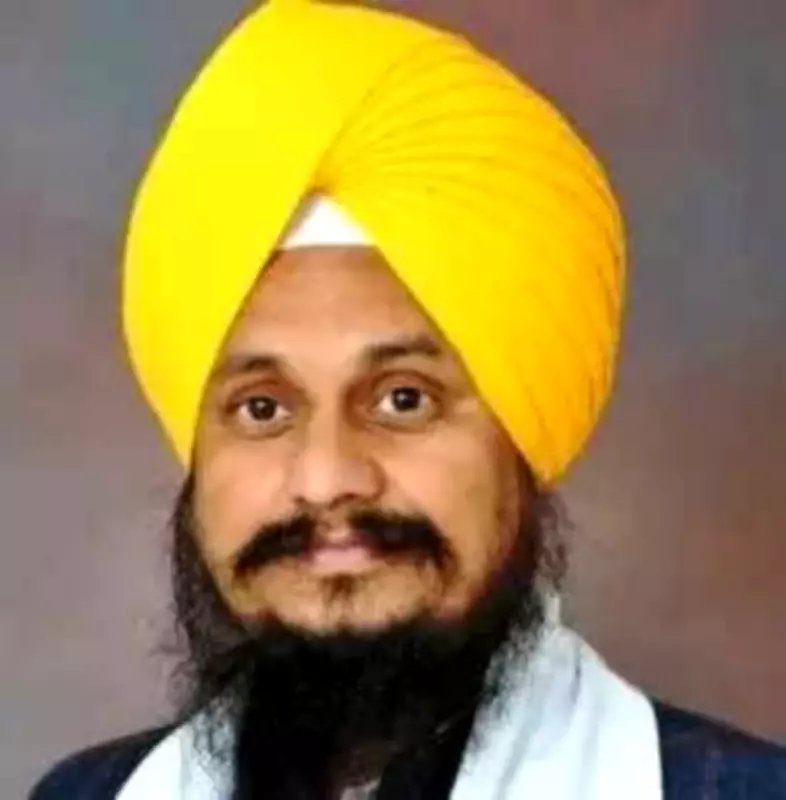
Giani Harpreet Singh, president of SAD (Punar Surjit) and former acting Jathedar of the Akal Takht, delivered a forceful caution to both the central and Punjab governments on Wednesday. He asserted that the inadequate handling of sacrilege cases possesses the dangerous potential to fracture social harmony, drawing a sobering historical parallel with events that preceded the Partition of India.
Historical Parallels to Pre-Partition Tensions
Addressing a gathering in Patiala during ongoing protests in Samana demanding stringent sacrilege laws, Giani Harpreet Singh argued that religious desecration, if left unaddressed by authorities, can dangerously deepen communal fault lines and destabilize nations. "Disrespect carried out with malicious intent has the power to divide countries. Governments must act decisively to ensure justice," he emphasized.
The former Jathedar specifically referenced a 1921 incident in Lahore involving the publication of a controversial book containing derogatory references to Prophet Muhammad. He maintained that this episode significantly intensified communal mobilization at a time when colonial authorities failed to provide adequate legal remedies, setting a precedent for later divisions.

Evolution of India's Legal Framework on Religious Offenses
Giani Harpreet Singh detailed the historical development of laws pertaining to religious sentiments. He noted that Section 295 of the Indian Penal Code, enacted in 1860, originally prescribed up to two years' imprisonment and was limited to physical damage to places of worship. Following the 1927 killing of the publisher in the Rangila Rasul case, the British government introduced Section 295(A), expanding the law to penalize deliberate and malicious acts intended to outrage religious feelings, including insults to religious texts and personalities.
"I urge the government to wake up, as Sikhs cannot endure disrespect towards their Guru. Just as the creation of Pakistan was rooted in a book that disrespected Prophet Muhammad, similarly, the disrespect of Shri Guru Granth Sahib should not become a reason to weaken India," he stated with urgency.
Contrast with Pakistan's Laws and Criticism of Current Penalties
The former Jathedar contrasted India's legal framework with that of Pakistan, noting that after 1947, Pakistan introduced Sections 295(B) and 295(C), prescribing harsher punishments for desecration of religious texts and blasphemy. He referred to the 2018 acquittal in the high-profile Asia Bibi case to underline the intense international attention such laws attract.
In India, Harpreet Singh said, penalties for sacrilege remain limited to two or three years in most cases, which he described as wholly inadequate. He cited the 2015 Bargari sacrilege incidents in Punjab, stating that the slow pace of investigation and prosecution has severely eroded public confidence in the justice system.
Political Failures and Demands for Stricter Legislation
Harpreet Singh criticized both the state and central governments for repeatedly failing to enact stricter anti-sacrilege laws. He pointed out that in 2016, the then SAD-BJP government in Punjab passed a Bill seeking life imprisonment for sacrilege, which was not approved by the Centre on the grounds that all religions must be treated equally under the law. A similar amendment moved in 2018 also did not receive assent.
He further referenced the Maur bomb blast case, alleging that despite confessional statements reportedly linking individuals associated with Dera Sacha Sauda, the accused have not been brought to justice. "How does the main accused of 2015 sacrilege roam freely in the streets of India and Punjab? The government charged him (Dera Sacha Sauda head) on July 4, 2020, yet he remains free," Singh remarked pointedly.
Call for Action and Planned Protest
Giani Harpreet Singh demanded life imprisonment or the death penalty for sacrilege of Shri Guru Granth Sahib, asserting that Sikhs require both a robust law and the unequivocal supremacy of their sacred text. Announcing plans to stage a protest at the chief minister's residence in Chandigarh, he urged authorities to act decisively before public discontent escalates further.

Reiterating that the supremacy of the Guru Granth Sahib is central to Sikh faith, he said the government must treat sacrilege cases with utmost urgency and seriousness to preserve communal harmony and national unity. He also called for universal respect for all religious texts and sites as a fundamental measure to prevent national instability and social fracture.