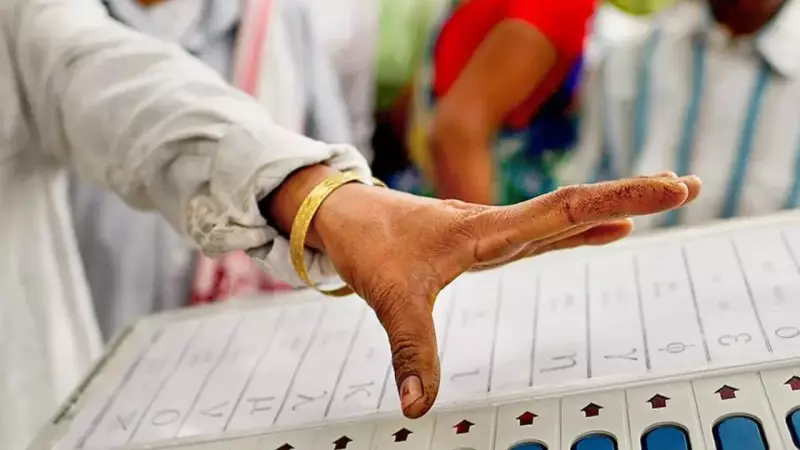
In the run-up to the Thane civic elections, political parties have placed their bets heavily on dynastic connections and experienced incumbents, sidelining new faces in a clear strategy focused on winnability. The trend is particularly pronounced in crucial belts like Kalwa, Mumbra, Diva, and Naupada-Kopri, where 29 sitting corporators have secured nominations once again across 11 key wards.
Family First: Kinship Overrides Grassroots in Shinde's Bastion
Political observers note that in the stronghold of Shiv Sena chief Eknath Shinde, organisational loyalty and family lineage continue to hold more weight than grassroots leadership. This is vividly illustrated in the Kolshet-Balkum area. Here, Sena veteran Devram Bhoir, his son Sanjay, and daughters-in-law Usha and Sapna are all contesting from different panels within ward 8. A fifth relative, Bhushan Bhoir, entered the fray as an independent from ward 3 after being denied a party ticket.
The trend extends to the inner circle of the deputy chief minister. Prakash Shinde, Eknath Shinde's younger brother and a former corporator, is in the contest. Similarly, the wife of Sanjay More, a Shiv Sena secretary and close associate of Shinde, is also a candidate. The family of another aide, former MLC Ravindra Fatak, is represented by his wife and brother, who are both contesting.

Rebellion and Solo Runs: When Party Tickets Are Denied
This emphasis on dynasty has, in several instances, triggered rebellions and independent campaigns. When parties failed to accommodate the kin of loyalists, some chose to go solo. In Ghodbunder, former corporator Namrata Gharat is fighting on an official Shiv Sena ticket, while her husband, Ravi, is contesting as an independent candidate.
A similar family divide is seen in Kalwa. Former NCP (SP) corporator Pramila Keni is now contesting as an Independent, while her son, Mandar Keni, is a Shiv Sena candidate. Both are competing from separate panels within the same ward, setting up a unique intra-family political battle.
Electability Trumps Experimentation in Sensitive Belts
Major political parties have clearly prioritized electability over experimentation, especially in the politically sensitive belts of Naupada, Kalwa-Mumbra, and Diva. By fielding mostly known faces, they are banking on the established voter trust and recognition that sitting corporators command.
Party leaders have defended this strategy, asserting that performance, not merely lineage, is the ultimate decider at the civic level. However, analysts point out that sitting corporators enjoy a distinct hyperlocal advantage—a deep understanding of ward-specific issues and a track record of local work—that first-time candidates find nearly impossible to replicate within a single election cycle. This calculated move underscores the high-stakes nature of the Thane civic polls, where established networks and name recognition are the currencies of choice.