DMK MP's North-South Education Comparison Ignites Political Firestorm
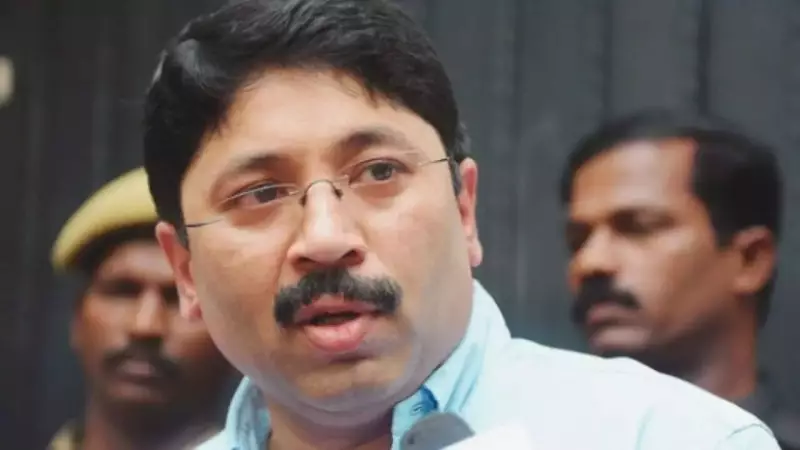
DMK parliamentarian Dayanidhi Maran ignited a heated political debate on Tuesday with pointed remarks about girls' education across India. Speaking at a government college event in Chennai, the MP drew sharp contrasts between educational approaches in different regions.
Contrasting Educational Approaches
Addressing students at Quaid-E-Millath Government College for Women, Maran presented a stark comparison. He asserted that northern states often confine girls to domestic roles while Tamil Nadu actively promotes their academic and professional advancement.
"In northern states, families frequently expect girls to remain at home performing household duties," Maran stated. "But here in Tamil Nadu, we encourage our daughters to pursue education and build careers."

The DMK leader framed this distinction within his party's political narrative. He described Tamil Nadu as India's premier state under Chief Minister MK Stalin's leadership, attributing educational progress to Dravidian principles championed by Periyar.
"Our Dravidian model government follows Periyar's vision of empowering women through education," Maran emphasized. "We take pride in our girl students and want every daughter to receive proper schooling."
Laptop Distribution Ceremony
The controversial comments emerged during a significant educational initiative. Deputy Chief Minister Udhayanidhi Stalin distributed laptops to 900 final-year students under the Ulagam Ungal Kaiyil scheme.
Stalin highlighted the government's substantial investment in this program. "We have allocated 2.5 crore rupees specifically for this college," he announced. "Our goal is to provide laptops to 10 lakh students statewide this year."
The deputy CM traced the scheme's evolution, noting that laptop distributions previously occurred in schools until 2019. The current administration has expanded the program to college students while maintaining technological standards.
Educational Philosophy and Guidance
Udhayanidhi Stalin connected the laptop distribution to broader educational philosophy. He referenced Periyar's famous advocacy for replacing kitchen utensils with books for girls, positioning the current initiative as continuing that legacy.
"Our chief minister isn't merely distributing laptops," Stalin explained. "He's emphasizing the fundamental importance of girls' education. We remain committed to this cause."
The deputy CM offered practical guidance to recipients. He urged students to prioritize academic use over entertainment platforms.
"Please utilize these laptops primarily for your studies," Stalin advised. "Don't let them become devices just for social media or video streaming. Use every resource effectively to surpass male counterparts in your chosen fields."
Political Backlash Emerges
Maran's regional comparisons quickly drew condemnation from political opponents. BJP spokesperson Narayanan Thirupathy launched a sharp critique of the DMK parliamentarian's statements.
"Dayanidhi Maran has once again insulted north Indian citizens," Thirupathy asserted. "It's regrettable that such rhetoric continues unchecked, though this pattern is typical for DMK representatives."
The BJP spokesperson questioned Maran's judgment, suggesting the remarks demonstrated poor sensibility. This exchange highlights ongoing political tensions surrounding regional narratives in Indian politics.
Historical Context and Institutional Legacy
During the event, speakers acknowledged the college's historical significance. Udhayanidhi Stalin noted that former Chief Minister Karunanidhi renamed the institution in 1974, expanding its infrastructure to support women's education.
The deputy CM praised students for their social awareness while extending New Year and Pongal greetings. He emphasized that educated women make substantial societal contributions, reinforcing the government's commitment to gender-inclusive education policies.
This Chennai event has sparked wider conversations about:

- Regional educational disparities across India
- Political narratives surrounding development models
- Technology integration in higher education
- Gender empowerment through government schemes
The laptop distribution continues Tamil Nadu's efforts to bridge digital divides while the accompanying political debate reflects deeper ideological divisions about regional development approaches.