

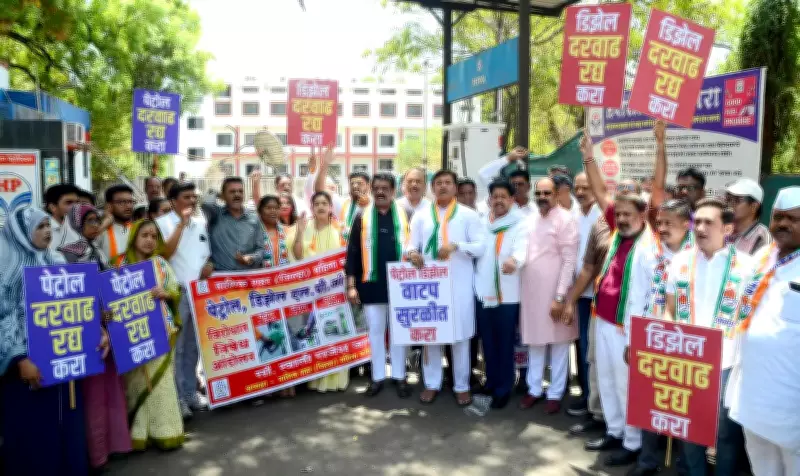
The Nashik unit of the Congress party organized demonstrations across the city on Friday to protest the ongoing diesel shortage and the recent increases in fuel prices. Party leaders asserted that these hikes have placed an additional burden on common citizens.
Memorandum Submitted to District Collector
Following the protests, Congress representatives submitted a memorandum to District Collector Ayush Prasad. They demanded immediate measures to ensure an adequate supply of diesel and to prevent further price increases. According to Congress leaders, diesel prices have been revised four times in the past two weeks, exacerbating public distress. They warned that the supply shortage could disrupt agricultural activities, especially with the approaching kharif season and the onset of the monsoon.
Congress Leader's Statement
Nashik city Congress chief Nilesh Khaire highlighted the issue, stating, "Over the past 11 days, petrol and diesel prices have been increased by Rs 8 per litre. This hike has rubbed salt into the wounds of the public already grappling with rising inflation." He further noted, "Over the last 12 years, petrol prices have increased by 38%, while diesel prices have increased by 62%. During the tenure of the UPA government led by Dr Manmohan Singh, crude oil prices had touched $100 per barrel, yet petrol and diesel prices were not allowed to cross Rs 70 per litre. In contrast, at present, even when crude oil prices are around $50–55 per barrel, petrol prices have soared to over Rs 100 per litre."

Allegations Against Central Government and Oil Companies
Khaire also alleged that in the last 12 years, the central government has collected as much as Rs 43 lakh crore through taxes and cess on petroleum products. "Furthermore, price hikes in the last four years enabled oil companies such as BPCL, IOCL and HPCL to earn nearly Rs 29,800 crore, which amounts to a financial burden imposed on the public," he claimed. The Congress party continues to press for immediate relief measures to mitigate the impact on the common man and the agricultural sector.






