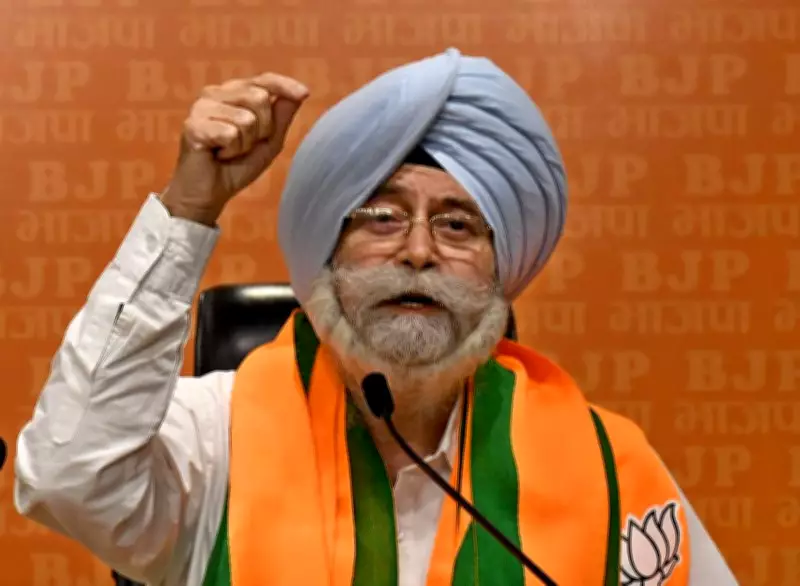
BJP's Sikh Gambit: Can Phoolka and Company Deliver the Sikh Vote in Punjab?
The Bharatiya Janata Party (BJP) is making a calculated political move in Punjab by actively courting the Sikh community, a demographic that has traditionally been elusive for the party in the state. This strategy centers around prominent Sikh figures, most notably H.S. Phoolka, a well-known lawyer and former AAP leader, who joined the BJP in 2022. The party's aim is to broaden its appeal beyond its conventional support base and make significant inroads in Punjab's complex electoral landscape.
The Strategic Outreach to Sikh Voters
Punjab's political scene is dominated by regional parties like the Shiromani Akali Dal (SAD) and the Aam Aadmi Party (AAP), with the BJP historically struggling to gain a strong foothold, especially among Sikh voters. In response, the BJP has launched a concerted effort to woo this key demographic. This involves not just symbolic gestures but substantive outreach through leaders who command respect within the Sikh community.
H.S. Phoolka, renowned for his legal advocacy in cases related to the 1984 anti-Sikh riots, brings a significant profile to this effort. His inclusion is seen as a move to bridge the trust deficit and address historical grievances, positioning the BJP as a party that cares about Sikh issues. Alongside Phoolka, other Sikh leaders have been roped in to bolster this campaign, aiming to create a cohesive narrative that resonates with voters.

Challenges and Electoral Implications
Despite these efforts, the BJP faces steep challenges in delivering the Sikh vote. The party's past associations and policies have often been viewed with skepticism by many in the Sikh community. Moreover, the strong presence of regional parties means that voters may remain loyal to traditional options, making it difficult for the BJP to break through.
Key factors influencing this gambit include:
- Historical Context: The legacy of past events, such as the 1984 riots, continues to shape political allegiances, and the BJP must navigate this sensitively.
- Local Issues: Voters in Punjab are increasingly focused on state-specific concerns like agriculture, drug abuse, and economic development, which may overshadow broader national narratives.
- Competition: With AAP's rise and SAD's enduring base, the BJP must differentiate itself effectively to attract support.
If successful, this strategy could reshape Punjab's politics, potentially leading to a stronger BJP presence and altering alliance dynamics. However, failure might reinforce the party's marginal status in the state.
Broader Political Strategy
This move is part of a larger BJP plan to expand its influence in regions where it has been weak. By leveraging figures like Phoolka, the party aims to project an inclusive image and tap into new voter segments. The outcome in Punjab will serve as a test case for similar strategies elsewhere, highlighting the importance of local leaders in national party frameworks.
In summary, while the BJP's Sikh gambit through Phoolka and company represents a bold attempt to crack the Sikh vote in Punjab, its success hinges on overcoming deep-seated challenges and resonating with voters on ground-level issues. The electoral results will ultimately reveal whether this strategy can translate into tangible political gains.