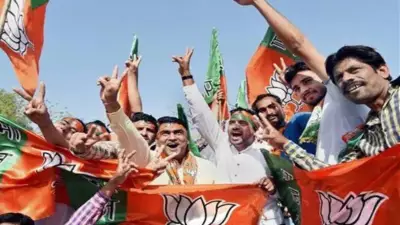
In a significant development for Mumbai's political landscape, the Bharatiya Janata Party (BJP) and the Shiv Sena led by Chief Minister Eknath Shinde have reached a consensus on seat-sharing for the upcoming Brihanmumbai Municipal Corporation (BMC) elections. After intense negotiations spanning nearly a week, the two allies have agreed on a formula for 200 of the 227 civic seats, leaving 27 seats still up for discussion.
The Breakthrough and the Sticking Points
Mumbai BJP chief Ameet Satam announced on Saturday that the parties have settled on a 128-79 seat distribution in favour of the BJP. However, talks regarding the allocation of the remaining 20 seats, which are part of the pending 27, are still ongoing. Satam clarified that a final decision on these contentious seats will be taken by the top leadership of both parties. The last date for filing nominations is Tuesday, adding urgency to the talks.
Shiv Sena functionaries revealed that their party has pushed for an additional 10-15 seats, aiming to bring their total tally to over 100. This figure aligns with their original demand when negotiations commenced. A senior Sena leader indicated that more rounds of talks were likely on Sunday evening, expressing hope for a few more seats. The BJP, on its part, has emphasized that it has already increased its offer significantly from an initial proposal of just 60-70 seats, suggesting that conceding over 100 seats to the Sena might not be feasible.
Negotiations and Political Calculus
The seat-sharing talks have involved high-level discussions. The first round was held late on Monday in the presence of Chief Minister Devendra Fadnavis and Deputy CM Eknath Shinde. A second round followed on Tuesday between key negotiators: BJP's Ashish Shelar, Ameet Satam, Praveen Darekar, and Atul Bhatkhalkar, and Sena's Uday Samant and Rahul Shewale.
Political observers note that the BJP's increased accommodation, moving from around 70 to roughly 80 seats for the Sena, is influenced by the new alliance between the Shiv Sena (UBT) led by Uddhav Thackeray and the Maharashtra Navnirman Sena (MNS). A Sena functionary explained that Shinde, during the meeting with Fadnavis, demanded triple-digit seats, arguing that his faction has 60 sitting former corporators and needs a stronger position to combat the Thackeray-MNS combine, especially in Marathi-dominated areas.
The Road Ahead and Smaller Allies
If a consensus is reached on the remaining seats, the final list of candidates could be declared as early as Sunday. Satam stated that the ruling 'Mahayuti' alliance will contest all 227 seats together, with the final decision on the 27 pending seats to be based on candidate strength and winnability criteria.
It is also important to note that both major parties will have to accommodate some smaller alliance partners, such as the Republican Party of India (Athawale) or RPI(A), within their respective seat quotas. The final agreement will set the stage for a high-stakes battle for control of India's richest municipal corporation, with the Thackeray-led opposition alliance posing a formidable challenge.