BJP Government Bows to Pressure, Withdraws Ujjain Land Acquisition Plan
In a significant reversal, the Bharatiya Janata Party government in Madhya Pradesh has withdrawn its ambitious land pooling scheme for Ujjain following intense pressure from the Rashtriya Swayamsevak Sangh and its farmers' wing. The decision, announced late on Monday, represents the first major concession by Chief Minister Mohan Yadav since taking office and marks the collapse of a project he once described as the "cornerstone of the transformation of Ujjain" - his home constituency.
How Farmers' Protest Forced Government Retreat
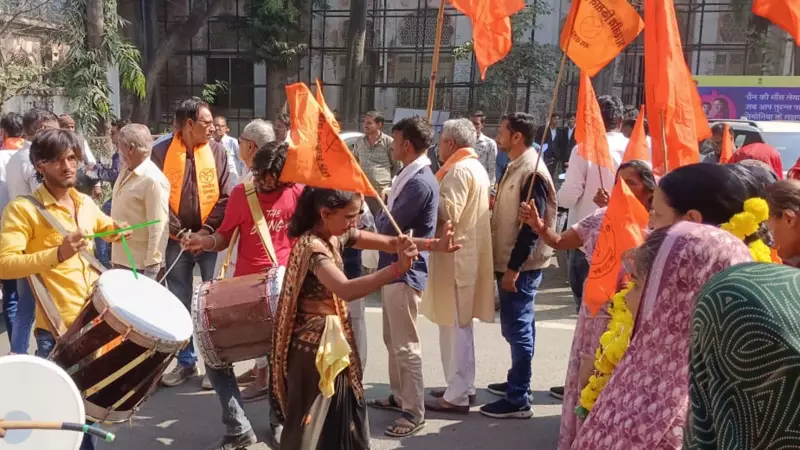
The controversy began in February when the RSS-affiliated Bharatiya Kisan Sangh launched a widespread agitation across the Malwa region, where it commands substantial influence with over 8 lakh members and more than 4,000 village committees. The protests gained momentum through autumn with tractor rallies, village meetings, and special rituals known as "Sadbuddhi Yagyas" that mobilized tens of thousands of farmers.
According to sources within the RSS, BKS, and local administration, Chief Minister Yadav had initially underestimated the strength of opposition. Officials with land acquisition experience had reportedly downplayed farmer discontent as routine, assuring the CM that protests were normal. "They told him protests were normal. By the time ground feedback reached Bhopal, the situation had hardened," revealed a government source.

The situation escalated when repeated letters from the BKS to the Chief Minister went unanswered. By mid-October, a detailed ground report had reached both the RSS headquarters in Nagpur and BJP strategists in Delhi. A senior RSS leader involved in deliberations explained their concern: "We told them that even if a quarter of this land was opened to construction, 12 years later there would be no ground left to conduct the Kumbh Mela."
Central Leadership Intervention and Final Rollback
The file quickly moved up the BJP's organizational hierarchy, reaching national general secretary (organisation) B.L. Santhosh, then party president J.P. Nadda, and finally Union Home Minister Amit Shah. Chief Minister Yadav was summoned to Delhi months ago for a review meeting where Shah reportedly objected to several provisions of the plan and demanded "another presentation from Yadav with better alternatives."
The final decision came hours before the BKS was set to launch a "Dera Dalo, Ghera Dalo" protest at the Ujjain Collectorate, which threatened to paralyze the Malwa region. Thousands of farmers from 18 districts were preparing to camp indefinitely with their own supplies, and reports indicated that numerous tractors were ready to descend upon Ujjain for a prolonged agitation.
The withdrawal was finalized during a two-hour meeting between senior BJP functionaries, BKS representatives, and top bureaucrats at the Chief Minister's residence late Monday. Senior BKS leader K. Raghvendra Patel noted that "the CM did not engage with the state unit at all and only spoke to central leaders." He revealed that Yadav met with BKS representatives for two hours to discuss the fine print only after Delhi approved the withdrawal.
Political Significance and Administrative Failures
The Malwa region, with Ujjain as its spiritual and political nerve center, has long served as the BJP's ideological reservoir and electoral stronghold. From the Ram Mandir mobilization in the late 1980s to farm-sector agitations after 2017, nearly every major movement shaping the party's rural outreach has passed through these plains.
For Ujjain North MLA Anil Jain Kaluheda - whose constituency contained 80% of the villages affected by the scheme - the rollback brings both relief and reflection. Praising the government's reversal as a "good step," he admitted: "But we failed to explain the scheme properly. I had over 30 meetings with farm unions and leaders, trying to show them how new roads and facilities could raise profitability. But they didn't accept it."

Several bureaucrats indicated that the government's reversal had more to do with opacity than policy flaws. After issuing the draft notification, officials failed to disclose land maps and benefit models, fueling suspicions of hidden motives. A senior officer confessed: "People kept asking for blueprints, which lands would be taken, how compensation would work, but we stalled for weeks. That delay cost us."
The land pooling scheme was originally conceived as the state government's marquee urban renewal project for the Simhastha festival in 2028 - the Kumbh Mela held in Ujjain every 12 years. Its abrupt cancellation underscores the continuing influence of RSS-affiliated organizations on BJP government policies, particularly on matters affecting the party's core support base.