BJP Fact-Finding Report on Bengaluru Evictions Sparks Political Controversy
A BJP fact-finding committee has submitted a detailed report on the recent eviction of alleged encroachers at Kogilu Layout in Bengaluru. The report presents findings that are stirring significant political debate across state lines.
Religious Demographics and Political Allegations
The committee's investigation revealed specific demographic details about the evicted families. According to their findings, the disputed land was occupied by 31 Hindu families, 135 Muslim families, and one Christian family. The report makes a striking claim that not a single victim came from Kerala, despite political narratives suggesting otherwise.
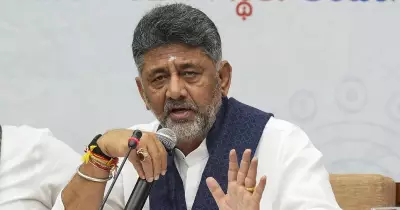
SR Vishwanath, the Yelahanka MLA who headed the panel, presented these findings to BJP state president BY Vijayendra on Monday. Vishwanath strongly criticized what he called political exaggeration of religious identity for electoral gains. "There is not a single person from Kerala in the list," Vishwanath stated clearly. "Even claims about religious identity are being exaggerated for political gains."

The report directly accuses Kerala's chief minister of intervening in the Bengaluru issue with specific political objectives. It claims this intervention aims to mobilize Muslim votes ahead of forthcoming assembly elections in Kerala. The BJP committee suggests this represents external political interference in Karnataka's internal matters.
Questions About Nationality and Demands for Investigation
The fact-finding report raises serious questions about the nationality of some evictees. It suggests that a few individuals might be from Bangladesh, though it acknowledges there is currently no documentary or material evidence to substantiate this specific claim.
Based on these concerns, Vishwanath has demanded a National Investigation Agency probe into the matter. He claims the issue involves "foreign nationals and organized illegal infiltration." The MLA emphasized that Kannadigas should not bear the consequences of "politics elsewhere," especially since the government is preparing a rehabilitation plan for legitimate residents.
Vishwanath made additional claims about migration patterns in Bengaluru. He stated that nearly 95% of ragpickers in the city are Rohingyas and that many possess migrant identity cards. "They told us they crossed the border after paying cash," he reported, "and that there is a network facilitating entry through West Bengal."
Parallel Political Developments and Constitutional Concerns
Separately, a BJP delegation led by opposition leader R Ashoka met Governor Thaawar Chand Gehlot at Raj Bhavan. They submitted a memorandum alleging "a collapse of law and order in the state." This meeting addressed broader governance concerns beyond the specific eviction issue.
Ashoka revealed that the delegation urged Governor Gehlot to withhold consent to the hate speech bill recently passed by the legislature. The opposition leader insisted the bill was passed without adequate discussion and raised constitutional concerns. "The bill is against fundamental rights enshrined in the Constitution," Ashoka asserted.
The BJP leader further alleged that the legislation would be used to suppress political opponents. "It will turn Karnataka into a police state," he warned, "since police can book anyone on charges of hate speech." This statement reflects deepening political tensions surrounding legislative measures in the state.
The eviction issue at Kogilu Layout has thus become intertwined with multiple political narratives. These include allegations of cross-state political interference, questions about migration and nationality, and broader debates about legislation and constitutional rights. The BJP's fact-finding report and subsequent political actions have ensured this local issue remains at the center of regional political discourse.