In a significant political development, the Bharatiya Janata Party (BJP) has been effectively pushed out of the race for the mayor's post in the Kalyan-Dombivli Municipal Corporation (KDMC). This exclusion comes after the position was officially reserved for the Scheduled Tribes (ST) category through a lottery draw conducted on Thursday.
Reservation Alters Power Dynamics in KDMC
The ST reservation has decisively reshaped the political landscape within the 122-member civic body. While the BJP commands a substantial presence with 50 corporators, the party faces a critical limitation: it does not have a single member from the ST category. This absence renders the BJP ineligible to field a candidate for the mayoral position, effectively removing them from contention.
Shinde Sena Alliance Gains Advantage
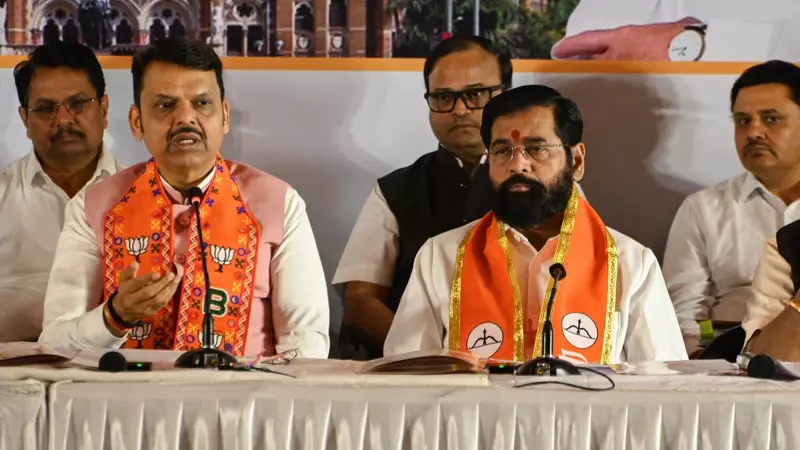
In contrast to the BJP's predicament, the Eknath Shinde-led Shiv Sena, along with its ally the Maharashtra Navnirman Sena (MNS), holds a distinct advantage. The Shinde Sena boasts two ST corporators, while the MNS contributes one additional ST member. This collective strength of three ST-category corporators positions the alliance favorably to stake its claim on the mayor's post.

The reservation announcement arrives amidst an ongoing power struggle between the BJP and the Shinde Sena for control of the civic body. This tussle intensified following the declaration of KDMC election results on January 16 and was further complicated by the MNS's decision to align with the Shinde Sena.
Political Reactions and Alliance Dynamics
BJP leader Deepesh Mhatre acknowledged the party's exclusion from the mayoral contest, stating, "There is no ST-category corporator with the BJP. However, the Shiv Sena and BJP are in alliance, and the Sena also has the support of the MNS. Together, we have three ST-category corporators who can become the mayor of KDMC."
When questioned about potential candidates for the position, Mhatre indicated that the decision would ultimately rest with the top leadership of the Mahayuti alliance. This suggests that internal discussions and negotiations within the broader coalition will determine the final selection.
Numerical Superiority of the Alliance
Shiv Sena leader Rajesh Kadam emphasized the alliance's numerical advantage, remarking, "We have three ST-category corporators—two from the Shiv Sena and one from the MNS." This statement underscores the strategic positioning of the Shinde Sena-led coalition, which now appears poised to secure the mayoral seat without direct competition from the BJP.
The reservation of the mayor's post for the ST category represents more than a procedural formality; it serves as a critical factor in determining political control within the KDMC. As the alliance consolidates its position, the BJP must navigate this new reality while maintaining its role within the broader Mahayuti coalition.
This development highlights the intricate interplay between reservation policies and political strategy in Indian municipal governance. The outcome of this mayoral selection process will likely influence future alliances and electoral calculations within Maharashtra's political landscape.