The political landscape in Karnataka has taken a humorous turn as the Bharatiya Janata Party (BJP) deployed artificial intelligence to satirize Deputy Chief Minister DK Shivakumar amid growing speculation about leadership changes within the Congress government.
AI-Generated Political Satire Goes Viral
The BJP's Karnataka unit recently shared an innovative AI-generated video on its official X account that has quickly gone viral across social media platforms. The cleverly edited clip depicts DK Shivakumar browsing an e-commerce website in search of a 'chief minister chair', only to encounter the frustrating 'out of stock' message when attempting to add the item to his cart.
This digital satire comes at a crucial time when internal discussions about power-sharing within the Karnataka Congress have intensified. The video was captioned "DK Shivakumar right now", directly referencing the ongoing political maneuvering surrounding the chief minister's position.

Background of the Leadership Tussle
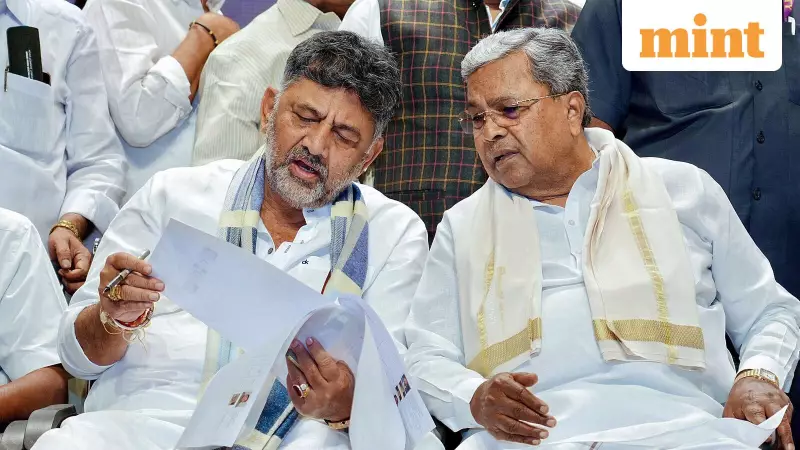
Speculation about a potential leadership change has been building momentum as the Congress government completed two and a half years of its term this month. Many political observers have referred to the current developments as the "November revolution," with supporters of Deputy CM Shivakumar actively campaigning for his elevation to the top position.
The roots of this political drama trace back to the Congress victory in the 2023 Karnataka assembly elections. Reports had initially suggested a rotational chief minister formula between Siddaramaiah and DK Shivakumar, where the latter would assume leadership after two and a half years. However, the party has consistently denied these claims.
Chief Minister Siddaramaiah recently asserted that he would continue in office for the full five-year term, though he acknowledged that the final decision rests with the Congress high command.
Political Reactions and Developments
Responding to the increasing speculation about internal conflicts within the Karnataka Congress, DK Shivakumar addressed the media on Tuesday from Kanakapura in Bengaluru South district. The Deputy Chief Minister emphasized his commitment to party unity, stating, "I believe in conscience. We should work according to conscience. I don't want to embarrass the party or weaken the party."
Meanwhile, support for Shivakumar's potential elevation continues to grow among party legislators. Ramanagara MLA Iqbal Hussain expressed strong confidence in Shivakumar's prospects, telling reporters, "200 per cent, he will become the CM soon. The high command will decide. As our leader (Shivakumar) said, the transfer of power is a secret deal among five to six party leaders, and those five to six people will decide."
Party sources revealed that a group of six legislators supporting Shivakumar traveled to Delhi on Sunday night to meet with the Congress high command, with additional MLAs expected to follow. This development follows last week's meeting where approximately 10 MLAs had discussions with AICC president Mallikarjun Kharge.
BJP's Strategic Use of Technology in Politics
The AI-generated video represents a new frontier in political campaigning, demonstrating how political parties are increasingly leveraging technology to communicate their messages and critique opponents. This isn't the first time the BJP has used AI videos to target Congress leaders in Karnataka, indicating a systematic approach to digital political satire.
The opposition party has intensified its attacks on both Siddaramaiah and Shivakumar amid the apparent power struggle within the ruling party. These technological interventions provide a contemporary twist to traditional political criticism, reaching younger audiences through platforms they frequent.
As the political drama unfolds, all eyes remain on the Congress high command's decision regarding the Karnataka leadership. The outcome will not only determine the state's political direction but could also set precedents for how political parties handle internal power-sharing agreements in the future.