Bengaluru High Court Greenlights Bike Taxis, Sparking Mixed Reactions
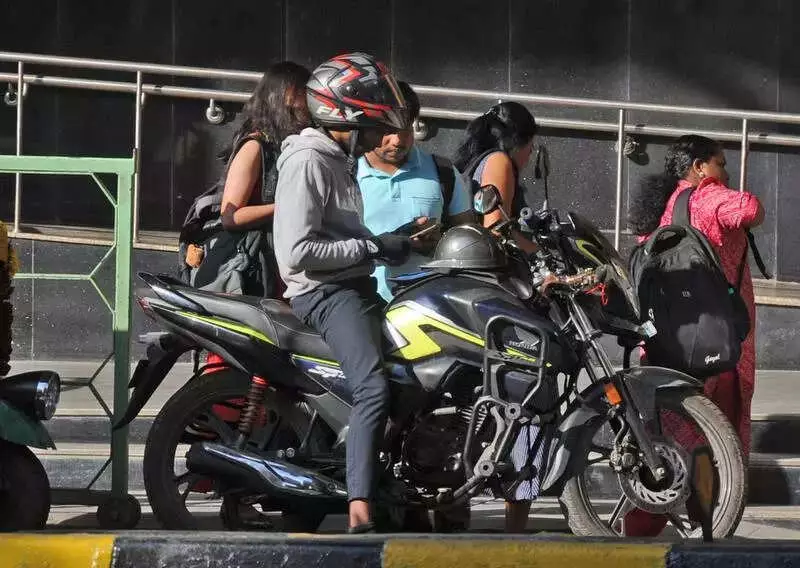
For the countless daily commuters in Bengaluru who depend on bike taxis for short-distance or last-mile rides, the High Court's order on Friday was not merely a legal triumph but a welcome return to normalcy. However, for lakhs of autorickshaw drivers, this development represents a significant setback to their livelihoods.
Commuters Applaud the Return of Affordable Connectivity
Akash M, a regular Metro commuter, emphasized that bike-taxi services play a crucial role in bridging commuting gaps. "Compared with other alternatives, bike taxis offer a cheaper and faster option to reach the nearest station," he explained. "Nevertheless, the government must implement regulations for aggregators. We have witnessed how some platforms impose multiple fees during auto bookings and pressure customers to pay tips before ride confirmation."
Bike taxis have consistently been promoted as a practical solution to Bengaluru's first- and last-mile connectivity challenges. The city currently boasts a 96-kilometer Metro network with 83 stations, and an additional 79 kilometers of lines are anticipated to become operational within the next three years. Despite this expansion, many commuters find that accessing these stations remains the most difficult part of their journey, a gap that bike taxis effectively fill.

Government Adopts a Cautious Stance
The government, which previously opposed bike taxi operations due to safety and legal concerns, has adopted a measured approach following the court's decision. Transport Minister Ramalinga Reddy stated that officials will thoroughly examine the High Court order before determining any further actions. A senior transport official mentioned that it is premature to outline the government's next steps, with potential options including:
- Developing comprehensive regulations for bike taxi operations
- Considering an appeal to the Supreme Court
Srividya, a frequent user of bike taxis, reported that her travel expenses decrease by 40% when these services are available. "When auto drivers declined short rides or demanded additional payments, bike taxis served as my reliable fallback option," she shared. The discussion has now evolved beyond mere legality to focus on sensible regulation. "Innovative solutions should be encouraged. While rules are necessary, blanket bans ultimately harm commuters," she added. Currently, the message from commuters is unequivocal: regulate the service to protect both riders and users.
Auto Drivers Voice Strong Opposition
Conversely, auto and taxi unions contend that bike taxis operate illegally, diminish their earnings, and jeopardize the livelihoods of thousands of families. Nataraj Sharma, President of the Federation of Karnataka State Private Transport Association, has urged the government to appeal the High Court order in the Supreme Court and issue an ordinance to safeguard the interests of auto and taxi drivers. He further asserted that permitting bike taxis would adversely impact lakhs of auto drivers across Karnataka.
BV Raghavendra, President of the Federation of Karnataka Autorickshaw Drivers' Union, has called for a bandh on February 12 to demand a ban on bike taxis. He announced that memorandums on this issue will be submitted to MLAs in their respective constituencies, highlighting the growing tension between traditional transport providers and emerging mobility solutions.