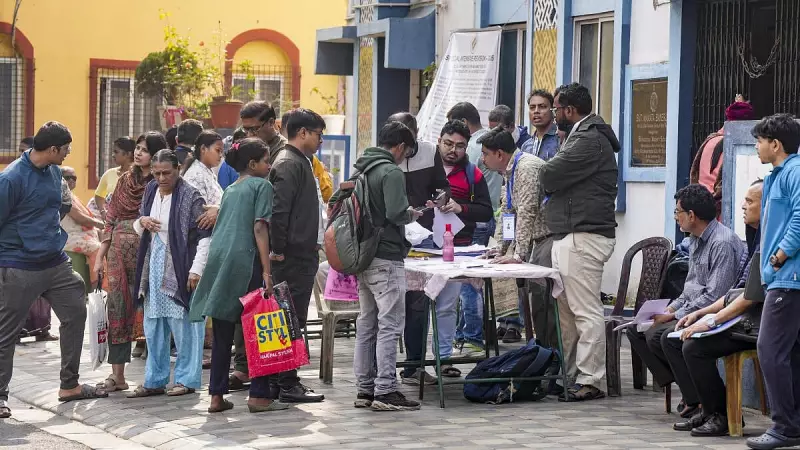
The political landscape of West Bengal has been ignited by a tragic and contentious issue: the deaths of seven individuals allegedly linked to the Suspected Indian Revolutionary (SIR) scheme. This incident has unleashed a fierce war of words between the ruling Trinamool Congress (TMC) and the opposition Bharatiya Janata Party (BJP), with each side accusing the other of grave misconduct and negligence.
The Tragic Incident and Immediate Aftermath
According to reports, the seven deceased were among a group of people who were reportedly picked up for questioning in connection with the SIR scheme. The circumstances surrounding their deaths remain shrouded in mystery and are the core of the dispute. While initial reports suggested possible links to the scheme, the exact cause and location of the deaths have become a major point of political contention.
The controversy erupted into the public domain when Leader of the Opposition in the state assembly, Suvendu Adhikari of the BJP, raised the issue. He presented what he claimed were documents and details pertaining to the deaths, directly accusing the state administration of involvement and demanding a thorough investigation.

A Fierce Political Blame Game Erupts
The TMC government, led by Chief Minister Mamata Banerjee, swiftly and vehemently denied any wrongdoing. Senior TMC leaders and ministers launched a counter-offensive, dismissing Adhikari's allegations as "baseless and politically motivated." They challenged the BJP to provide concrete evidence and accused the opposition of spreading misinformation to tarnish the state's image.
The war of words quickly escalated beyond mere denials. The TMC leadership turned the tables by questioning the BJP-led central government's role. They pointedly asked why the National Investigation Agency (NIA) or other central agencies, which are often deployed in the state for various probes, had not taken cognizance of the matter if it was indeed as serious as alleged.
This rhetorical move was designed to frame the issue as either a fabrication by the BJP or, conversely, as a failure of central agencies under the BJP's watch. The political discourse grew increasingly acrimonious, with both parties holding press conferences and issuing statements laden with serious accusations.
Demands for Probe and Mounting Pressure
Amid the chaos, the primary demand from the BJP and sections of the civil society has been for an impartial and transparent investigation. Suvendu Adhikari has called for a probe by a central agency like the NIA or the Central Bureau of Investigation (CBI), expressing no faith in a state-controlled inquiry.
The state government, however, has insisted it is capable of conducting a fair investigation and has questioned the timing and intent behind the BJP's sudden raising of the issue. This deadlock over who should investigate has further deepened the crisis, leaving the families of the deceased in a limbo of grief and unanswered questions.
The incident has also brought the SIR scheme itself under scrutiny. Questions are being asked about its implementation, the protocols followed for detentions or questioning, and the safeguards in place to prevent such tragedies. The human cost of the episode has been starkly highlighted, shifting focus from pure political sparring to issues of governance, accountability, and human rights.
Broader Implications for Bengal's Politics
This controversy is not happening in a vacuum. It feeds directly into the highly charged and bitterly competitive political environment of West Bengal. The TMC and BJP are locked in a relentless struggle for dominance, and every incident, especially one involving law and order or alleged state excess, becomes a potent weapon.
The "SIR deaths" episode has all the ingredients to become a major flashpoint. It involves serious allegations of loss of life, a direct clash between the state and central political forces, and a complete breakdown of trust between the ruling party and the principal opposition. The narrative battle is intense, with each side trying to convince the public of its version of the truth.

As the war of words continues with no sign of abatement, the immediate consequences are a further erosion of political discourse and a delay in justice for the victims' families. The long-term impact could be significant, potentially influencing public perception and becoming a central issue in future electoral battles. The demand for a credible investigation remains the only path to cut through the political noise and address the profound human tragedy at the heart of this controversy.