West Bengal's Political Transformation: A Tale of Two Eras
On May 20, 2011, a humid summer afternoon in Kolkata witnessed a historic political shift. Crowds gathered outside Raj Bhavan as Mamata Banerjee took oath as the first woman chief minister of West Bengal, marking the end of a 34-year Left Front rule and the beginning of a new chapter. Dressed in her trademark white cotton sari with a blue border and a tricolour uttariya, she arrived after visiting the Kalighat Kali Temple, taking the oath at 1:01 pm, a time chosen as auspicious by her family priest.
Accusing the communists of failing West Bengal's 90 million people and contributing to economic decline, she declared, "We will give good governance. There will be an end to autocracy and atrocities. This is the victory of people against years of oppression." This moment set the stage for a governance model starkly different from that of her predecessor, Jyoti Basu, whose legacy had defined the state for decades.
The Legacy of Jyoti Basu: Structural Reforms and Cadre Consolidation
Jyoti Basu served as chief minister from 1977 to 2000, leading the Left Front to five consecutive Assembly victories and establishing one of India's longest uninterrupted elected governments. His tenure was anchored in structural agrarian reform and decentralised rural power. A defining pillar was Operation Barga, a land reform programme that registered and legally protected sharecroppers, enhancing tenancy security for nearly 1.5 million bargadars and redistributing millions of acres of ceiling-surplus land.
Alongside land reforms, Basu strengthened the three-tier panchayati raj system, devolving administrative and financial powers to elected rural bodies. However, his era faced criticism for industrial stagnation during the 1980s and early 1990s. Frequent labour strikes and militant trade unionism contributed to a perception of Bengal as industry-unfriendly, leading to companies relocating and slower private investment. By the late 1990s, questions about job creation and economic diversification grew, setting the stage for change.
Mamata Banerjee's Welfare-Driven Governance Model
When Mamata Banerjee assumed office in 2011, she inherited a countryside reshaped by redistribution but unsettled by industrial conflict. Her strategy leaned heavily on targeted welfare schemes and direct benefit transfers, centred around the slogan "Maa, Mati, Manush." One of her first major decisions was returning acquired farmland in Singur to unwilling farmers, symbolically reversing the previous government's industrial land acquisition policy.
Over time, her administration shifted from structural land reform to direct financial assistance. The Krishak Bandhu scheme, for instance, provides farmers and sharecroppers with Rs 10,000 per acre annually, covering over 1.09 crore beneficiaries and disbursing Rs 2,930 crore in the latest cycle. Since its 2019 launch, more than Rs 24,000 crore has been allocated, with additional social security assistance for families of deceased farmers.
Contrasting Welfare Architectures: Institutional vs Direct Transfers
Under Jyoti Basu, welfare was embedded within structural reform, focusing on land redistribution, tenancy security, and decentralised governance through empowered panchayats. Rural employment, agricultural credit, and food distribution were strengthened via state-backed institutions, with education and public health spending expanding gradually through government schools and primary healthcare centres.
In contrast, Mamata Banerjee built a welfare architecture centred on direct financial assistance and identifiable beneficiaries. Programmes like Kanyashree, Sabooj Sathi, Lakshmir Bhandar, and Krishak Bandhu reoriented the state's strategy toward predictable cash flows and household-level impact, with benefits transferred directly into bank accounts.
Education and Health: Expansion vs Subsidy-Driven Access
During Basu's era, West Bengal saw significant expansion in education infrastructure, with literacy rates rising from 38% in 1977 to 77% in 2011. Healthcare introduced a rural three-tier model, linking primary health centres to district hospitals, and infant mortality declined rapidly. Health insurance schemes covered around 25 lakh unorganised sector workers.
Under Banerjee, education and health policy shifted toward direct household-level support. Sikshashree and Sabooj Sathi aimed to reduce dropout rates and improve mobility for rural students. In healthcare, the Swasthya Sathi scheme provides cashless treatment coverage of up to Rs 5 lakh per family, covering over 2.5 crore households, with immunisation and key health indicators continuing to improve.
Industrial and Economic Shifts Across Eras
The Left Front era under Basu inherited an industrial base but prioritised small-scale industries, discouraging foreign investment. Labour militancy and strikes led to industries relocating, with private investment slowing. A shift came in 1994 with a liberalised industrial policy welcoming private and foreign investment.
Under Banerjee, her government sought to reposition West Bengal as investment-friendly, promoting IT and services. Salt Lake Sector V hosts around 2,800 IT and ITeS firms, employing roughly 2 lakh professionals as of 2023. The state has also pushed mining projects, green technology initiatives, tourism expansion, and infrastructure upgrades like metro rail extensions.
Electoral Report Card: Ideological Consistency vs Welfare Delivery
Jyoti Basu led the Left Front to five consecutive Assembly victories between 1977 and 1996, relying on a deeply embedded rural network, disciplined cadre structure, and peasant support through land reforms. By the late 2000s, fatigue and unrest over industrial land acquisition eroded this dominance.
Mamata Banerjee ended the Left Front's 34-year rule in 2011, winning 184 seats on her own and securing a decisive majority with allies. Her dominance strengthened in 2016 and 2021, with a third consecutive term in 2021 despite BJP aggression. Her electoral strategy relies on direct welfare delivery, cash assistance, and targeted benefits to women, students, and rural households.
Conclusion: Bengal's Next Political Test in 2026
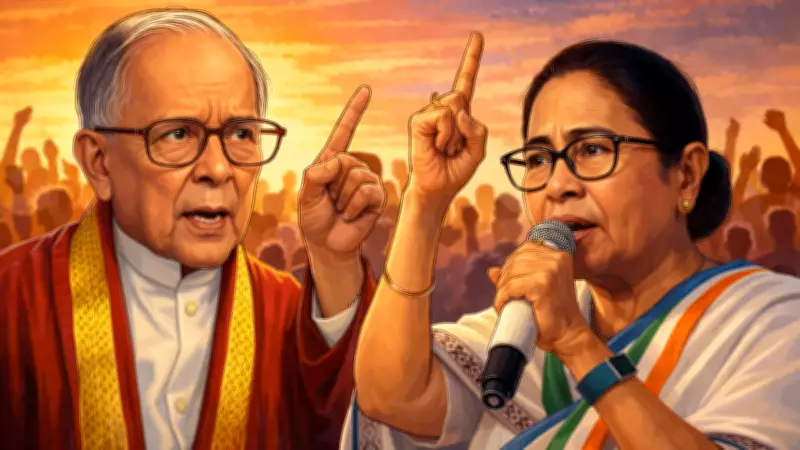
As West Bengal approaches the 2026 Assembly elections, the contrast between these two models is stark. Jyoti Basu institutionalised a cadre-driven, ideology-led governance structure rooted in land reform and class mobilisation. Mamata Banerjee has centralised political authority while expanding direct welfare delivery and targeted income support.
The state's political grammar has shifted from structural redistribution to beneficiary-based governance and from party organisation to personalised leadership. The upcoming elections will test whether Bengal continues along this path or signals the beginning of another new political chapter, reflecting the enduring legacies of its longest-serving chief ministers.