Congress Reels as Former Assam Chief Bhupen Borah Defects to BJP
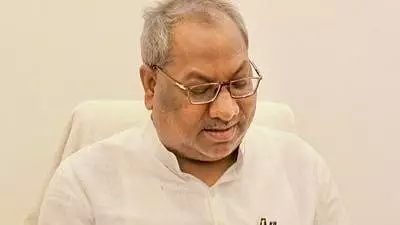
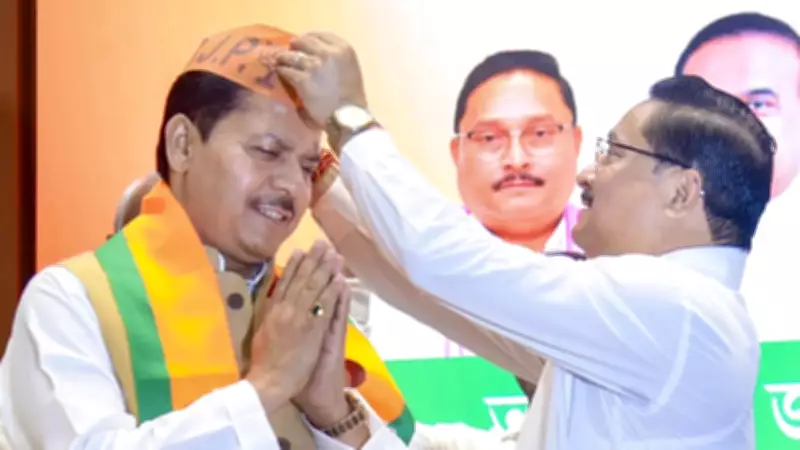
In a dramatic political development, the Congress party in Assam has suffered a severe blow with the formal defection of its former state president, Bhupen Borah, to the Bharatiya Janata Party (BJP). The move, which occurred at the BJP headquarters, Vajpayee Bhawan, on Sunday, has sent shockwaves through the grand-old party as it prepares for the crucial 2026 assembly elections.
A Déjà Vu Moment for Congress
This defection bears an uncanny resemblance to the events of 2015, when Himanta Biswa Sarma, a key Congress figure, left the party ahead of the 2016 assembly polls. Sarma had recently recalled that Sonia Gandhi had virtually cleared him for the chief minister's post, only for a phone call from Rahul Gandhi to change everything. "Madam had asked me to decide on the date," Sarma said, referring to Sonia Gandhi, "but the situation changed after Rahul Gandhi made the calls."
History seems to have repeated itself with Borah. After his resignation, Congress leaders, including Rahul Gandhi, attempted to persuade him to stay. All India Congress Committee (AICC) state in-charge Jitendra Singh claimed Borah had "withdrawn" his resignation after discussions. However, Borah countered this, stating that Rahul Gandhi called him "but did not say a word" about his resignation letter.

"He mentioned how we helped the party grow, and he helped me over the years, which is true, but he did not say a word about my resignation letter," Borah told PTI. He added that when he expressed feeling humiliated in the party, Rahul Gandhi responded by saying he was also feeling humiliated. "Then what is the value of my humiliation? I cannot tolerate such humiliation as I do not have so much capacity," Borah asserted.
Roots of the Rift: Grievances and Marginalization
In his resignation letter to Congress president Mallikarjun Kharge, Borah detailed numerous grievances against fellow leaders Gaurav Gogoi and Rakibul Hussain. He accused them of marginalizing him in the party's decision-making processes and steering the state unit under Hussain's influence, a move he claimed has alienated the majority community in Upper Assam.
"Personal reversals I can withstand, but self-respect and dignity are not currencies with which I may barter," Borah wrote. He alleged that Gogoi broke an opposition alliance he had stitched together, fearing that if the opposition came to power "by chance," he might not become chief minister. Borah also criticized the handling of alliance talks, noting that when he was tasked with leading negotiations on February 9, Gogoi insisted on including Rakibul Hussain, contrary to the meeting's decision.
Furthermore, Borah highlighted issues during the 2024 bypolls, where a proposal for a CPI(ML) candidate in Behali was ignored by the AICC. "The leaders of the other alliance parties then told me that if you cannot leave even one seat out of the five, what is there left to discuss for the 126 seats in the next elections?" he said, leading to his resignation as head of the coalition on moral grounds.
Political Fallout and Broader Implications
Assam Chief Minister Himanta Biswa Sarma welcomed Borah into the BJP, promising him a "safe seat" in the upcoming assembly polls. Sarma claimed Borah's resignation marks a "separation" of Congress from Hindu society, calling him the last recognized Hindu leader in the state unit. "Bhupen Borah was the last recognised Hindu leader of the Congress," Sarma stated, predicting more defections and suggesting disillusioned Muslim leaders might join Raijor Dal.
Drawing parallels to his own journey, Sarma asserted that Borah's exit reflects deeper issues within Congress. "His resignation carries the symbolic message that in Congress, no one from a normal family can prosper. Congress does not give recognition to people from ordinary families," he said, contrasting it with his rise in the BJP.

Congress's Internal Struggles Extend Beyond Assam
Assam is not an isolated case of infighting within the Congress party. In Karnataka, tensions between Chief Minister Siddaramaiah and Deputy Chief Minister DK Shivakumar have been publicly visible. In Odisha, Mohammed Moquim resigned citing organizational issues. During the Bihar assembly elections, rebel leaders protested after being denied tickets, and Congress emerged as the weakest link in its alliance.
Borah now joins a growing list of leaders who have exited Congress after clashes with the high command or state-level rivalries, including Jyotiraditya Scindia, Ghulam Nabi Azad, and Jitin Prasada. As the 2026 assembly elections approach, Congress finds itself at a critical juncture, grappling not only with the formidable BJP but also with persistent internal frictions that threaten to undermine its electoral prospects.
The defection of Bhupen Borah underscores the challenges Congress faces in maintaining unity and morale. With the ghosts of past exits haunting the party, its ability to navigate these internal dynamics will be crucial in determining its fate in the upcoming polls.