Andhra Pradesh Legislative Assembly Approves Seven Significant Bills
The Andhra Pradesh legislative assembly, in a session held on Wednesday, gave its approval to seven crucial bills that amend various state laws. These legislative changes impact municipal administration, panchayat raj, voter enrolment, and the regulation of Ayush hospitals, marking a significant step in governance reforms.
Municipal Administration Amendments: Tax Relief and Anti-Discrimination Measures
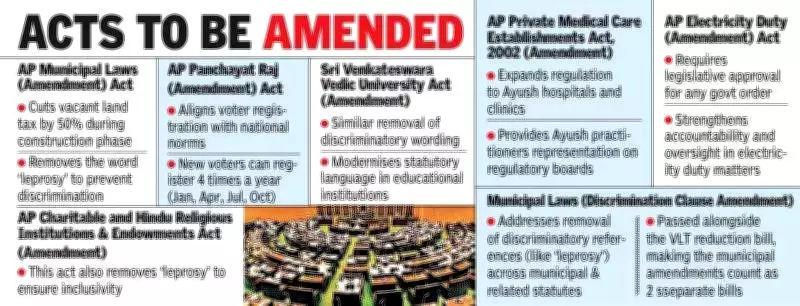
Municipal administration minister P Narayana introduced two key bills. The first bill implements a substantial 50% reduction in vacant land tax (VLT). This tax cut is applicable from the date building permission is obtained until the issuance of an occupancy certificate, completion of construction, or the expiry of the permission—whichever occurs first. Narayana emphasized that this amendment aims to enhance the ease and speed of doing business, responding to numerous representations from builders' associations such as NAREDCO and CREDAI.
The second amendment involves the removal of the word "leprosy" from municipal laws. This change aligns with a Supreme Court order issued on May 7 last year. Narayana stated that the decision is intended to prevent discrimination, as leprosy is no longer classified as a communicable disease. Similar amendments were also made to the AP Charitable and Hindu Religious Institutions and Endowments Act and the Sri Venkateswara Vedic University Act to eliminate the term.

Panchayat Raj and Voter Registration Reforms
The assembly passed the AP Panchayat Raj Amendment Bill, 2026, which was introduced by tourism minister K Durgesh on behalf of deputy chief minister and Panchayat Raj minister K Pawan Kalyan. This amendment harmonizes Panchayat Raj voter registration norms with those used for Parliamentary and assembly elections. A notable new provision allows individuals turning 18 years old to register to vote four times a year—on January 1, April 1, July 1, and October 1—instead of the previous once-a-year opportunity. The government had earlier issued an ordinance for this change on December 23, 2025. During the discussion, MLAs urged steps to address irregularities in voter lists to ensure accuracy and fairness.
Regulation of Ayush Hospitals and Legislative Oversight
In another significant move, the assembly approved amendments to the AP Private Medical Care Establishments Act, 2002, to extend regulatory oversight to Ayush hospitals. Health minister Satya Kumar Yadav highlighted that Ayush clinics currently operate without any monitoring framework, despite their substantial growth in recent years. The amendment brings these establishments under the same regulatory ambit as allopathic hospitals. Once approved by both Houses of the legislature, Ayush practitioners will gain representation on regulatory and appellate boards, ensuring their inclusion in healthcare governance.
Additionally, the assembly passed the AP Electricity Duty Amendment Act, which introduces a clause mandating that any government order under the Act must receive prior legislative approval. This change aims to enhance transparency and accountability in the implementation of electricity-related policies.
Summary of Key Bills Passed:
- Amendment to AP Municipal Laws Act for a 50% reduction in vacant land tax.
- Removal of the term "leprosy" from municipal and related acts to prevent discrimination.
- AP Panchayat Raj Amendment Bill, 2026, aligning voter registration with parliamentary practices and allowing four registration dates annually for new voters.
- Amendment to the AP Private Medical Care Establishments Act to regulate Ayush hospitals.
- AP Electricity Duty Amendment Act requiring legislative approval for government orders.
These legislative actions reflect the Andhra Pradesh government's efforts to streamline administrative processes, promote business-friendly policies, and ensure equitable healthcare and electoral systems. The bills now await further legislative steps for full implementation.