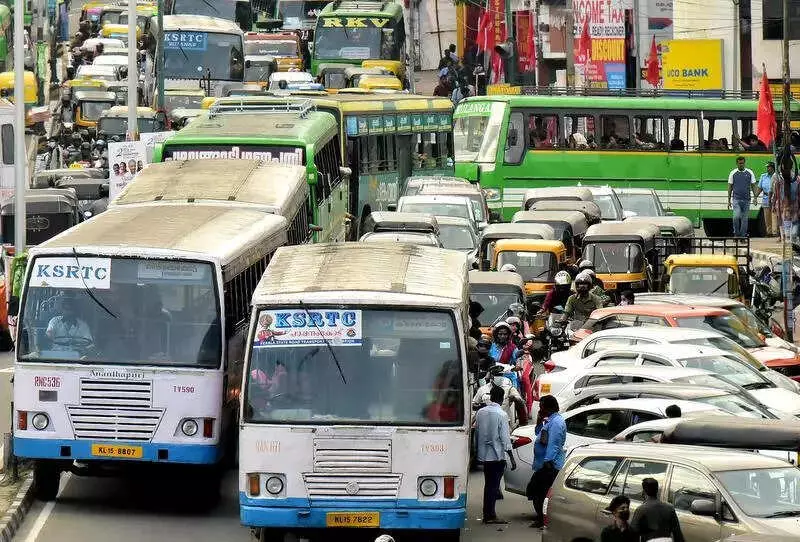
The roads of Thiruvananthapuram have once again transformed into perilous zones for commuters, with a spate of fatal accidents bringing the city's chronic traffic management failures into sharp focus. Reckless driving, blatant signal violations, and dangerous overtaking, particularly by buses and trucks, are creating a deadly environment for motorists.
A Deadly Two-Day Span on City Roads
The gravity of the situation was underscored by three separate fatal accidents within just two days. These tragedies occurred at Kazhakkoottam, Karakkamandapam, and Pallichal, snuffing out lives and reigniting public anger over systemic negligence. Among these, two horrific collisions involved KSRTC buses that claimed the lives of two-wheeler riders, who died on the spot. The incidents have spotlighted inefficient traffic policing, poor signal management, and the frequent, aggressive overtaking by buses and other heavy vehicles.
Systemic Failures and Public Outcry
Residents and daily commuters point to a combination of infrastructural and administrative failures. Sasikumar of the Nemom Residents Association outlined a grim checklist of problems: inadequate traffic signals, a complete absence of signals at key junctions like Karakkamandapam and Vellayani, missing countdown timers for pedestrians, and a severe shortage of safe pedestrian crossings. "When signals are on, there are no timers to help people cross. They wait and then risk darting through heavy traffic. There is no pedestrian crossing at Pravachambalam at all," he stated.

The association's feedback to traffic police and the KSRTC has yielded little lasting change. While authorities occasionally deploy a civil police officer or warden after complaints, these measures are typically withdrawn within days. Motorists also highlight that signals are not operated round-the-clock, despite high nighttime traffic density. Most signals start only at 8 AM, creating a dangerous free-for-all at junctions much earlier when school children begin their commute. "Vehicles zoom past junctions when signals are off. This is a huge risk for morning commuters," explained a local.
Accident Hotspots and Official Response
The traffic police have identified over 10 accident-prone hotspots in the city, including Pappanamcode, East Fort, Chackai, and Muttathara. Alarmingly, it is estimated that roughly 30% of all accidents and injuries in the region occur on national highways, state highways, and PWD roads. The human cost is staggering, with approximately 222 fatalities recorded on these roads in 2024 alone.
While a KSRTC official claimed that drivers receive regular training, including a mandatory five-day program for those involved in fatal accidents, this seems inadequate against the backdrop of recurring tragedies. The problem is compounded by the design of new highways, which, while straight and fast, have dangerous merges with narrow city roads, heightening the risk. Furthermore, private buses are frequently accused of ignoring signals and recklessly overtaking smaller vehicles.
The recent death of a senior photojournalist, whose two-wheeler was knocked down by a KSRTC bus at Karakkamandapam on Wednesday, stands as a tragic testament to the ongoing crisis. Until a comprehensive, sustained effort is made to address signal infrastructure, driver sensitization, and 24/7 traffic management, the capital's roads will remain a threat to its citizens.