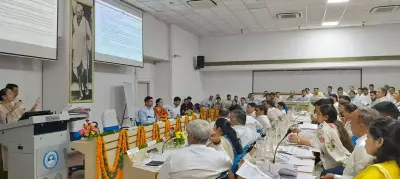
The Supreme Court on Friday followed through on Prime Minister Narendra Modi's appeal to citizens to conserve fuel amid the ongoing Middle East crisis. The top court judges decided to hear cases exclusively through video conferencing on Mondays and Fridays and have unanimously resolved to encourage car-pooling arrangements to ensure optimal fuel utilization.
Work-from-home for registry staff
In a related move, up to 50 percent of the registry staff in each branch or section will be allowed to work from home for a maximum of two days a week on a rotational basis, provided court functioning remains unaffected, according to a report by ANI. Registrars concerned will have the authority to alter or limit the arrangement depending on operational requirements and the essential nature of work in specific sections.
Government's lead in fuel conservation
On Wednesday, Prime Minister Modi himself traveled in a drastically trimmed-down convoy, while several senior ministers, including Home Minister Amit Shah and Defence Minister Rajnath Singh, also reduced the size of their cavalcades by more than half. The move was widely seen as an attempt by the government to signal that it is willing to practice what it preaches after PM Modi urged citizens to minimize fuel consumption through measures such as work-from-home, virtual meetings, and restrained travel.

The Supreme Court's decision aligns with the government's broader efforts to reduce fuel consumption and set an example for the nation. By adopting video conferencing for hearings and promoting car-pooling, the judiciary aims to contribute to the national cause of fuel conservation during these challenging times.
The measures are expected to have a significant impact on reducing the court's carbon footprint and setting a precedent for other institutions to follow. The Supreme Court's proactive approach demonstrates its commitment to supporting the government's initiatives and leading by example in times of crisis.