The Supreme Court has constituted a five-member high-powered committee to establish a new expansive definition of 'Aravali hills and ranges,' after discarding the earlier controversial 100-meter height criterion that had been accepted by the court. The committee includes experts from the Indian Council of Forestry Research and Education (ICFRE), the Forest Survey of India (FSI), and the Geological Survey of India (GSI).
Committee Composition and Mandate
A bench comprising Chief Justice Surya Kant and Justices Joymalya Bagchi and Vipul M Pancholi stated that the Director General of ICFRE will serve as the ex-officio chairperson. The other members are former FSI Director General Subhash Ashutosh, former GSI Director Rajendra K Sharma, former Ministry of Environment and Forests Joint Secretary Brij Mohan Singh Rathore, and Ashok K Bhatnagar, former head of botany at Delhi University. The committee is required to submit its report by August 31.
Environmentalists Raise Concerns
Environmentalists, including two petitioners in the case, questioned how a panel led by a bureaucrat reporting to the government could ensure a fair, impartial, and independent assessment. The committee's primary task is to evaluate the ecological validity of both the 100-meter elevation and 500-meter gap criteria applied by an earlier panel, whose report was accepted by the Supreme Court in its November 20 judgment last year. The bench had previously stayed the operation of that definition.

Key Areas of Investigation
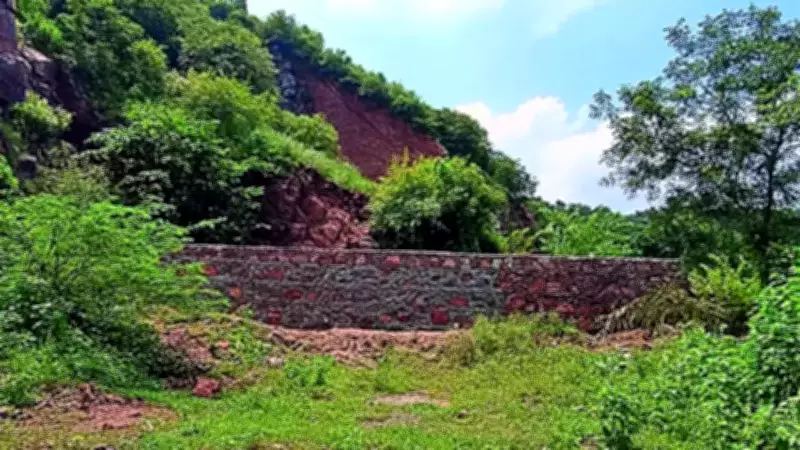
The high-powered committee will examine whether the widely publicized criticism—that only 1,048 hills out of 12,081 in Rajasthan meet the 100-meter elevation threshold, thereby stripping the remaining lower ranges of environmental protection—is factually and scientifically accurate. Importantly, the committee will analyze whether sustainable mining or regulated mining within the newly demarcated Aravali areas, despite regulatory oversight, would result in any adverse ecological consequences. It will also conduct a detailed identification of territories that would be excluded from protection under the new definition, considering the ecosystem and biodiversity.
Long-term Ecological Implications
The bench emphasized that the high-powered committee is expected to objectively assess the implications of the measures contemplated and assist the court in determining whether their implementation could lead to ecological, environmental, or other consequences that might prove difficult or impossible to reverse. Such an exercise is necessary to ensure that any final decision does not inadvertently cause further degradation of the Aravali ecosystem and that appropriate measures are devised to safeguard these ancient mountain ranges and the ecological systems they sustain.
Additional Members and Public Participation
The committee will include J Krishnaswamy, dean of the School of Environment and Sustainability at the Indian Institute for Human Settlements, and Laxmikant Sharma of Central University of Haryana as special invitees. A director-rank officer from the Ministry of Environment and Forests will serve as the member secretary. The Supreme Court noted that the issue impacts a wide range of stakeholders, including environmentalists, NGOs, mining lease holders, and villagers. The committee can invite representations from the public. The court will hear the case again on September 7.