Maharashtra Women's Commission Chairperson Advocates for Gender Mindset Transformation in Kolhapur
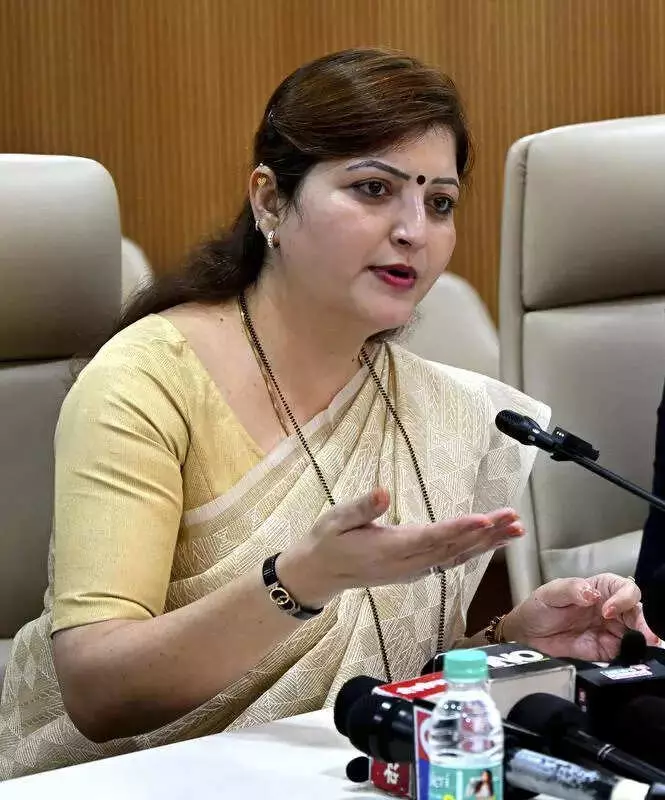
In a significant address that resonated with historical significance, Maharashtra State Women's Commission Chairperson Rupali Chakankar declared on Friday that substantial social progress can only be achieved through a dual transformation of societal attitudes. Speaking at an important gathering in Kolhapur, Chakankar articulated that men must fundamentally alter their perspectives toward women, while women themselves need to reconsider how they interact with and support other women in their communities.
Historical Legacy and Contemporary Responsibility
"Kolhapur represents the progressive territory of Rajarshi Shahu Maharaj and continues to uphold the distinguished legacy of Maharani Tarabai," Chakankar emphasized during her keynote speech. "When initiatives for women's empowerment originate from this historically significant region, they possess the potential to inspire transformation across the entire state of Maharashtra."
The commission chairperson elaborated on her vision for societal change, noting that while advocating for women's rights remains crucial throughout Maharashtra, genuine progress requires deeper cultural shifts. "We firmly believe that society can experience authentic transformation only when men's attitudes toward women undergo meaningful evolution," she stated. "However, we must also acknowledge the reality that women sometimes become unintentional obstacles to other women's rights and advancement. This particular mindset requires urgent modification."

Chakankar made a powerful appeal for solidarity among women, urging them to actively support and elevate one another rather than engaging in behaviors that might diminish or undermine fellow women. "Women should consistently uplift and empower each other, never demeaning or obstructing one another's progress," she asserted with conviction.
Workshop on Women's Empowerment and Legal Awareness
The chairperson delivered these remarks during the inauguration of a comprehensive one-day workshop titled ‘Sakshama: Women's Empowerment through Awareness of Women's Laws and Eradication of Superstitions'. This collaborative event brought together multiple organizations including the Maharashtra State Women's Commission, Shivaji University's internal complaints committee, the Beti Bachao Abhiyan initiative, and the university's student development department.
Distinguished attendees at the inaugural ceremony included University Registrar Dr. Vilas Shinde and Deputy Superintendent of Police Suvarna Patki, highlighting the institutional support for women's empowerment initiatives. The workshop attracted substantial participation from educators, students, and representatives of various women's organizations throughout the region.
Enhanced Legal Protections and Social Initiatives
Chakankar revealed significant developments in the commission's authority, announcing that "the women's commission has now received enhanced authority to initiate punitive actions against violations of women's rights." She explained that these strengthened legal provisions now serve as crucial safeguards for approximately 31% of working women across Maharashtra, representing a substantial advancement in protective measures.
"These reinforced legal mechanisms have evolved into effective instruments for safeguarding women's rights and dignity in various professional and social contexts," the chairperson confirmed, underscoring the practical implications of these policy improvements.
Cultural Practices and Social Solidarity
The commission chairperson issued several important appeals to transform cultural practices and social attitudes. She specifically encouraged women to demonstrate greater inclusion toward widows by inviting them to participate in traditional ceremonies such as haldi-kumkum gatherings. "We must cease insisting that widows discard symbols of marriage and instead welcome them fully into our social and ceremonial activities," Chakankar urged.

Furthermore, she called upon communities to celebrate the birth of daughters with genuine enthusiasm, actively oppose the practice of child marriage, and extend meaningful solidarity to all women regardless of their circumstances. "For nearly two centuries, beginning with Savitribai Phule's pioneering struggle for womanhood, we have continued this essential movement," she reflected. "Now, we must prepare ourselves to champion the battle for motherhood with equal determination and commitment."
Expert Sessions on Women-Centric Legislation
Throughout the workshop day, numerous experts conducted specialized sessions focusing on various women-centric laws and social issues. The comprehensive program included:
- Political science professor Dr. Bharati Patil providing detailed explanations of the provisions within the Prevention of Sexual Harassment (POSH) Act
- Radiologist Dr. Sunil Kuber, social activist Geeta Hasurkar, and advocate Gauri Patil leading discussions about awareness regarding the Pre-Conception and Pre-Natal Diagnostic Techniques (PCPNDT) Act
- Sociology professor Dr. Pratibha Desai from Shivaji University, Kolhapur presenting information about the Swayamsiddha and Stree Shakti government portals
- Advocate Seema Patil and social activist Nandini Jadhav addressing the critical importance of eradicating superstitions in contemporary society
The event witnessed participation from numerous dignitaries including the commission's Member Secretary Nandini Awade, Finance and Accounts Officer Dr. Suhasini Patil, Student Development Department Director Dr. Tanaji Chougule, Women and Child Development Officer Suhas Waingade, along with Shilpa Patil and Varsha Patil. The substantial attendance demonstrated the growing interest and commitment to women's empowerment initiatives throughout the Kolhapur region.