The Maharashtra government has introduced the RTI Rules, 2026, making it more expensive and cumbersome for citizens to seek information under the Right to Information Act. The new rules, notified last week, mandate proof of citizenship and raise fees for applications and appeals.
Key Changes in Fees
The fee for filing an RTI application has been increased from Rs 10 to Rs 30. Charges for photocopies, digital copies, and scanned documents have risen from Rs 2 to Rs 5 per page. First appeals, previously costing Rs 20, will now require a fee of Rs 50, while second appeals will cost Rs 100 instead of Rs 20.
Single Subject and Word Limit
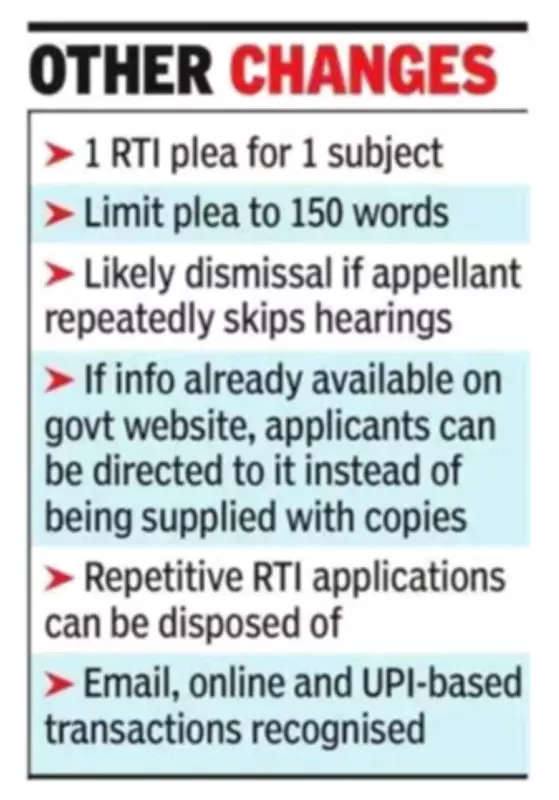
Citizens can now seek information on only one subject per application. Applications must be concise, generally restricted to 150 words. If an application covers multiple subjects, the Public Information Officer (PIO) may process only the first subject and ask the applicant to file separate applications for the rest.

Proof of Citizenship and Public Interest
Applicants must submit a self-attested copy of a photo identity document establishing citizenship; otherwise, the application can be returned. When seeking personal information, citizens must demonstrate a larger public interest. Mere assertion of public interest will not suffice. This change is linked to Section 44(3) of the Digital Personal Data Protection (DPDP) Act, 2023, which has altered Section 8(1)(j) of the RTI Act concerning disclosure of personal information. Three PILs have been filed in the Supreme Court challenging the DPDP Act's constitutionality.
Accountability and Activists' Concerns
The rules state that failure by public authorities to proactively disclose information may be treated as dereliction of duty, with responsibility fixed on the office head. However, activists have criticized the changes. Jeetendra Ghadge, RTI activist and founder of The Young Whistleblowers Foundation, said the government has made access to information more expensive instead of addressing the backlog of appeals. As of December 2025, the State Information Commission's (SIC) Greater Mumbai bench had 3,722 pending second appeals. Across Maharashtra, nearly 1 lakh second appeals and complaints were pending before the SIC and its benches in 2025.
Ghadge alleged that very few penalties were imposed on errant PIOs in the past five years, fostering impunity and routine rejection of RTI applications. He called charging applicants for scanned documents unjustifiable given negligible digital sharing costs. Former Central Information Commissioner Shailesh Gandhi said several provisions dilute the spirit of the RTI Act, including insisting on proof of citizenship and higher appeal fees. He also expressed concern over the provision allowing appeals to be dismissed for non-prosecution if appellants repeatedly fail to appear. Additionally, Gandhi noted that information available on a government website will not be given duly attested, meaning it cannot be presented anywhere.