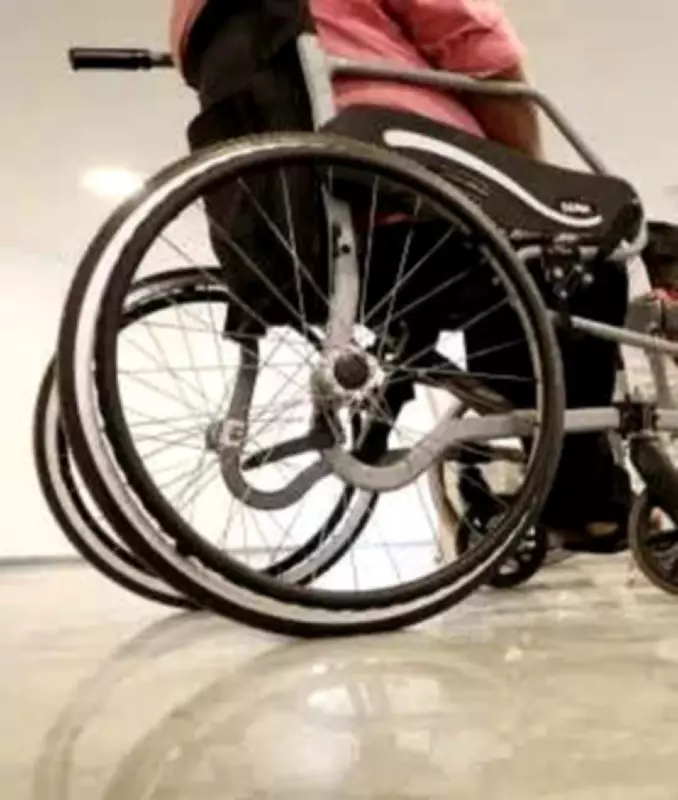
The Karnataka High Court has established a comprehensive standard operating procedure to ensure universal accessibility for persons with disabilities (PwDs), requiring compliance across a wide range of spaces, including government offices, public and commercial buildings, hospitals, schools, transport systems, religious and cultural sites, and residential developments.
Court Directive and Background
Justice Suraj Govindaraj issued these guidelines while deciding a petition filed by a Bengaluru-based private school against an order by the state commissioner for PwDs, Karnataka, which favored a teacher who became disabled after a freak incident in 2013.
The court directed the chief secretary or principal secretary of the women and child development department to establish a State Accessibility Authority within six months to monitor and enforce accessibility norms in all buildings. Similarly, district accessibility committees must be set up across the state within the same timeframe. The court also instructed the state government to frame accessibility rules and appoint nodal officers for enforcement.


Key Accessibility Norms
- Occupancy Certificate: No occupancy certificate will be issued for any public building unless it fully complies with accessibility requirements under Section 44 of the Act and the Harmonised Guidelines-2021. This requirement is non-negotiable, and no waiver shall be granted.
- Accessibility Audit: Occupancy certificates for public buildings will be issued only after a final accessibility audit by an empanelled auditor confirms compliance with the guidelines.
- Trade Licenses: Grant or renewal of trade licenses for all establishments occupying public buildings will be made only after issuance of accessibility certification.
- Step-Free Access: All public buildings shall have at least one step-free access route from the public footpath or road to the principal functional areas of the building.
- Ramps and Entrances: Ramps with a gradient not exceeding 1:12 (preferably 1:15 where space permits) shall be provided at all principal entrances, with handrails on both sides and anti-slip surfaces. Principal entrances shall have automatic doors, sliding doors, or doors with lever handles (not knob handles).
- Reserved Parking: Provision of reserved accessible parking spaces as close as possible to the accessible entrance. A minimum of 2% of total spaces, or at least one space (whichever is greater), must be reserved for PwDs. For high-footfall buildings like malls, airports, and stadia, a minimum of 2% with a floor of four spaces should be demarcated. The parking bay should have a minimum width of 3,600 mm to allow wheelchair transfer from vehicles.
- Accessible Toilets: Provision of gender-neutral accessible toilets wherever feasible to accommodate transgender persons with disabilities and those requiring attendant assistance. For persons requiring catheter care or other medical procedures, a clean, private, accessible space shall be designated and maintained for this purpose.
- Equal Opportunity Policy: Every establishment must frame, notify, display, and register an equal opportunity policy under Section 21 of the PWD Act read with Rule 8 of the Rules within six months.
Digital Accessibility Framework
- All digital platforms and systems operated by or on behalf of government establishments must comply with WCAG 2.1 Level AA as the minimum standard for all government websites, portals, and applications.
- Provision of screen-reader compatibility for all content and full keyboard navigation without dependence on a mouse, closed captions for all audio-visual content, Indian Sign Language video interpretation for key government information, text alternatives for all non-text content, and adjustable text size and contrast settings.
Students with Disabilities
- All schools must have written inclusive education policies covering all disability types and all genders, including transgender students.
- No student with a disability can be refused admission solely on account of disability. Educational institutions need to conduct inclusion feasibility assessments. All specified disabilities, not limited to physical or locomotor disability, shall be accommodated.