Industry Bodies Urge Goa Government to Delay Deposit Refund Scheme Launch
In a significant development, eight prominent industry associations have jointly appealed to the Goa state government to postpone the implementation of the Deposit Refund Scheme (DRS), which is scheduled to commence on April 1. The industry groups have expressed serious concerns that the scheme will substantially increase costs for consumers while creating substantial logistical challenges due to insufficient infrastructure.
How the Deposit Refund Scheme Will Work
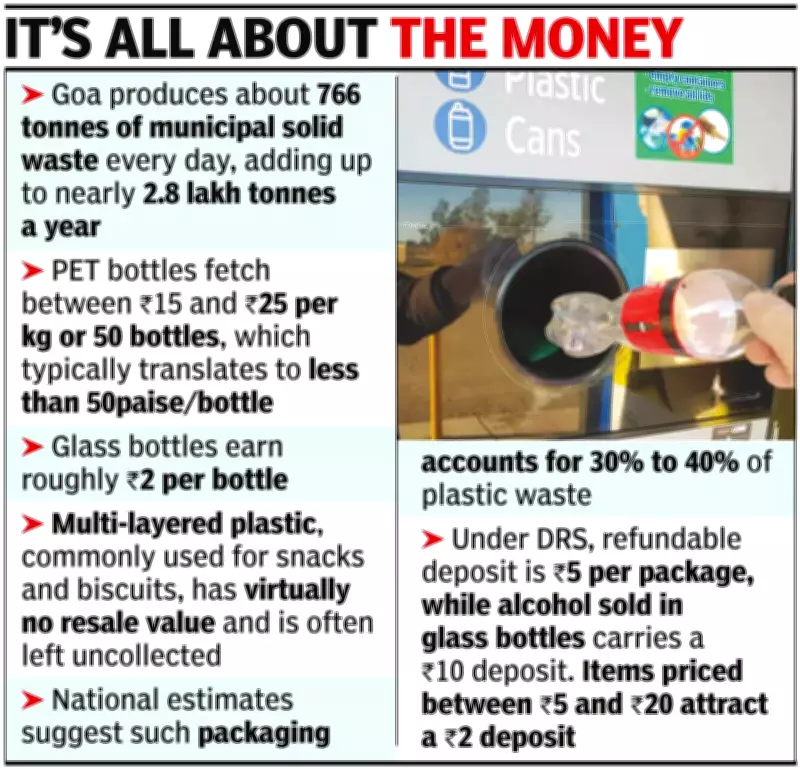
The proposed scheme requires consumers to pay a deposit ranging from Rs 2 to Rs 10 on various products sold in plastic and glass packaging. This includes alcohol bottles, multilayered wrappers, and milk cartons. To reclaim their deposit amounts, consumers must carefully preserve the empty packaging and return these items to designated collection centers, where they will receive digital reimbursement for their deposits.
Industry Concerns and Opposition
The industry bodies that have raised objections include:

- Indian Beverage Association (IBA)
- Federation of Indian Chambers of Commerce and Industry (FICCI)
- PET Packaging Association for Clean Environment (PACE)
- Action Alliance for Recycling Beverage Cartons (AARC)
- Goa State Industries Association (GSIA)
- Goa Chamber of Commerce & Industry (GCCI)
- Feminine & Infant Hygiene Association (FIHA)
In a joint statement issued by IBA, AARC, FIHA, and PACE, the industry representatives expressed their apprehension about the scheme's implementation. The statement highlighted that consumers will effectively pay twice for waste management – through regular household waste management fees and the additional deposit amounts under DRS.
The industry groups have raised several specific concerns:
- The 300 waste collection points being established are insufficient and poorly located, particularly for urban residents
- Questions about the necessity of the scheme given Goa's existing door-to-door waste collection system
- A call for establishing a joint working group comprising industry representatives, consumer advocates, local bodies, and technical experts before proceeding with the rollout
Government Response and Committee Position
Despite these industry concerns, the Goa DRS administrative committee has firmly rejected the objections, asserting that the scheme will ensure that those who actively collect and segregate waste receive direct financial benefits into their accounts.
Anthony de Sa, Chairperson of the committee, emphasized that the DRS corrects a long-standing imbalance in waste management systems. "DRS rewards responsible behavior toward waste management, creates better income opportunities for the informal sector, and addresses waste management challenges in a tourism-driven region like Goa," he stated.
Potential Economic Benefits for Waste Collectors
The department has outlined significant financial incentives for waste pickers and scrap dealers under the new scheme:
- Up to Rs 250 for 50 PET bottles – representing a tenfold increase from current earnings
- Rs 10 per glass bottle – a fivefold increase from existing rates
- Rs 200 for every 100 multilayered plastic packets returned – items that currently have no monetary value
The committee acknowledges that while urban waste collection has achieved near-universal coverage, significant weaknesses persist in treatment and recycling processes at the village level. The DRS aims to address these gaps while creating economic opportunities for those involved in waste collection and management.
The ongoing debate highlights the complex balance between environmental objectives, consumer interests, and practical implementation challenges in waste management policy.