NEW DELHI: More than eighteen months have passed since a heartbreaking incident claimed the lives of a young mother and her three-year-old son in east Delhi's Ghazipur area, yet the very hazard that led to their tragic demise remains alarmingly unchanged. An open drain near Ghazipur continues to overflow, posing a persistent threat to local residents, with the recent winter rain in Delhi on Thursday once again laying bare the glaring civic negligence that plagues the locality.
The Lingering Peril and Foul Reality
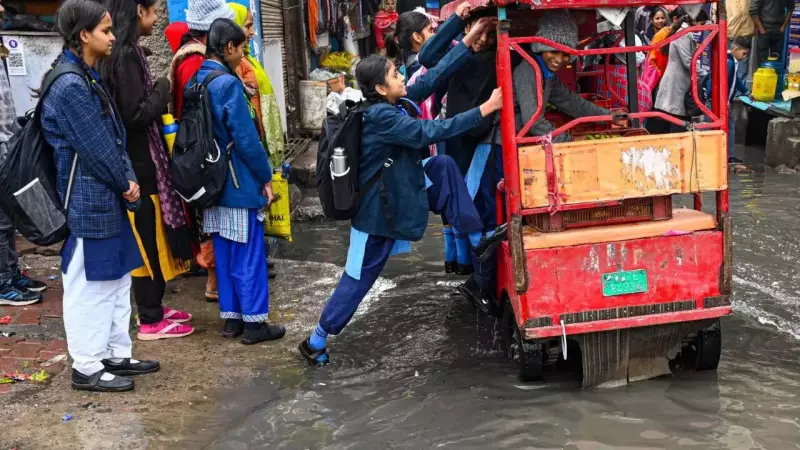
Following the rainfall, the drain flooded extensively, emitting a foul stench that makes the area nearly unbearable for those living nearby. Beyond the unpleasant odor, the daily risk it presents, particularly for children commuting to and from school, is a constant source of anxiety for the community.
"We can’t even stand here because of the smell from this overflowing drain. Our daughters are risking their lives every day just to come back from school," expressed Sushma Kumari, a distressed resident of the area, highlighting the ongoing danger that has become a part of daily life.

A Tragedy That Shook the Community
On July 31, 2024, the area witnessed a devastating event when Tanuja Bisht, aged 23, and her son, Priyansh, lost their lives after falling into a 1.5-foot-deep, waterlogged open drain during heavy rainfall. The tragedy unfolded as the mother attempted to rescue her child, and their bodies were discovered hours apart, still holding hands—a poignant image that underscored the depth of the loss.
Bureaucratic Deadlock and Jurisdictional Disputes
The incident sparked a significant war of words between the Delhi Development Authority (DDA) and the Municipal Corporation of Delhi (MCD), with both agencies embroiled in a dispute over jurisdiction concerning the unbarricaded drain. This bureaucratic impasse has hindered any substantive action to address the hazard.
The drain is situated between Uttar Pradesh's Khoda Colony and Delhi's Mayur Vihar Phase-III, a location that complicates administrative responsibilities. Most children from this area attend three Delhi government schools in Kalyanpuri and Kondli, making their daily commute a perilous journey.
Recurring Danger and Broken Promises
Residents report that the drain becomes a recurring danger with every seasonal spell of rain, exacerbating fears during monsoon and winter showers. Adding to the frustration, merely ten days before the tragic drowning, the MCD had assured the Delhi High Court that repair work had commenced in the area.
However, more than a year later, the ground reality tells a starkly different story. The lack of progress and continued negligence have left the community feeling abandoned and vulnerable, with the memory of the tragedy serving as a grim reminder of the urgent need for action.
As Delhi grapples with infrastructural challenges, the Ghazipur drain stands as a testament to the critical gaps in civic management and the dire consequences of bureaucratic delays, putting innocent lives at risk day after day.