A report presented during a road safety meeting on Wednesday has revealed that five highways and expressways passing through Gurgaon, designed to ensure seamless connectivity, have become the most dangerous stretches for commuters. These corridors accounted for more than half of all road fatalities in the district.
Key Findings of the Report
The findings indicate that 228 people lost their lives on NH-48, NH-919, NH-248A, NH-248BB, and SH-15A between March 2025 and March 2026. This figure represents 53% of all road deaths in the district. The accident density on these corridors ranged from 0.78 to 3.34 crashes per kilometre, underscoring the scale of risk on roads that were intended to move traffic efficiently but have instead become sites of recurring tragedy.
Deadliest Corridor: Delhi-Jaipur Highway (NH-48)
The Delhi-Jaipur Highway (NH-48) has emerged as the deadliest stretch. Its 44-kilometre segment recorded 147 deaths and 133 fatal accidents, the highest fatality density among all major corridors in the district. Officials stated that several black spots have already been identified on this highway.

Other High-Risk Stretches
The 26-kilometre Gurgaon-Alwar Road (NH-248A) followed with 31 deaths and 30 fatal accidents. The 15-kilometre Sohna-Rewari Road (NH-919) reported 21 fatalities in 17 crashes. The 19-kilometre Dwarka Expressway (NH-248BB) saw 16 deaths and 15 fatal accidents, while the 17-kilometre Jhajjar Road (SH-15A) recorded 13 deaths in 11 crashes.
Primary Causes of Fatalities
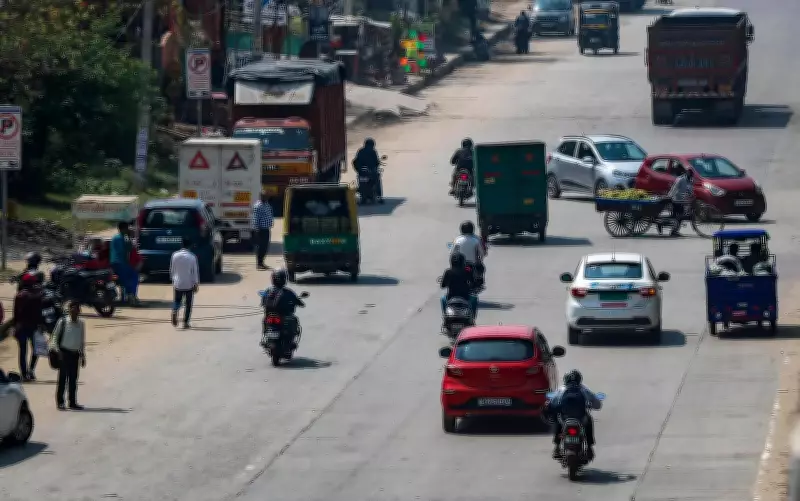
Officials cited speeding and engineering deficiencies as primary contributors to fatalities on these corridors. Illegal and unplanned road cuts created by locals and commercial establishments have further increased risks. Wrong-side driving has emerged as a particularly serious concern on Dwarka Expressway, Sohna Elevated Road, and NH-48, where motorists frequently drive against traffic to take shortcuts.
Inadequate pedestrian infrastructure compounds the danger. A shortage of foot overbridges and underpasses forces residents of nearby villages and housing societies to cross busy carriageways at unsafe points. Poor lighting on several stretches aggravates the problem, making potholes, sharp turns, and other hazards difficult to spot at night.
Expert Analysis
Road safety expert Saurabh Saxena, who works closely with the traffic police, said the crisis has a structural dimension that goes beyond enforcement. “Highways and expressways are ideally designed to bypass cities rather than pass through them — they are meant to function like ring roads, carrying high-speed traffic away from city streets,” he explained. “The problem in Gurgaon is that the city has developed around these corridors. A large share of local traffic uses them even though they are built for high-speed movement.”
Saxena pointed out that such roads are not designed to accommodate pedestrians or slow-moving vehicles like two-wheelers. “When local traffic, pedestrians, and high-speed vehicles are forced to share the same space, the risk of accidents increases significantly,” he added.
Government Response and Corrective Measures
Taking note of the findings, Deputy Commissioner Uttam Singh directed NHAI, PWD, and other agencies to identify accident-prone black spots and implement corrective measures on priority. Joint inspections will be conducted at vulnerable locations. Agencies have been asked to install additional road signage, improve lane markings, implement speed-calming measures, repair and operationalise streetlights, and develop designated bus stops and bays. Safe pedestrian crossing facilities, including foot overbridges and underpasses, will also be created wherever required.
Gurgaon has been included in the Centre’s zero fatality district campaign under the Ministry of Road Transport and Highways. Under this initiative, the district administration, traffic police, and road-owning agencies will work jointly to reduce accidents through engineering improvements and stricter enforcement.