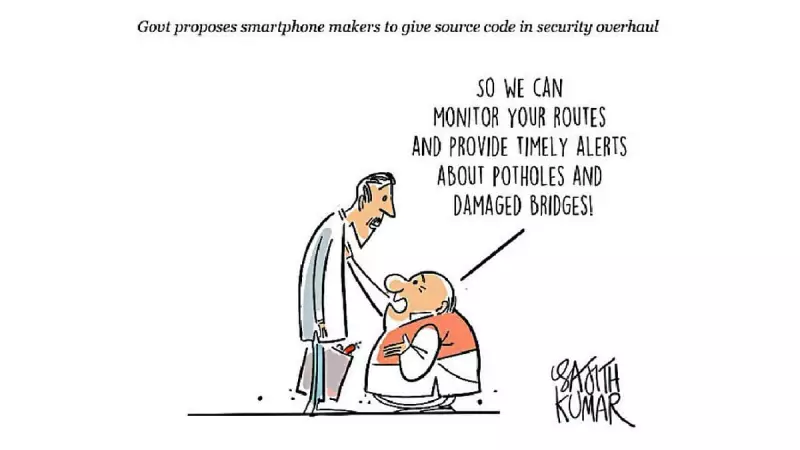
A powerful editorial cartoon from Deccan Herald, succinctly titled 'Timely Alerts,' has captured significant attention for its stark commentary on a crucial aspect of modern governance and public welfare. The artwork serves as a poignant visual reminder of the indispensable role that prompt and effective warning systems play in safeguarding citizens. By distilling a complex issue into a single, impactful frame, the cartoonist compels viewers to reflect on the mechanisms meant to protect them.
The Visual Narrative of Public Safety
The DH Toon employs classic symbolic imagery to convey its message. It likely features elements representing authority or governmental systems alongside symbols of impending danger or disaster. The core contrast drawn is between the act of issuing an alert and the critical timing of that action. The artistic critique hinges on the gap that sometimes exists between the identification of a threat and the dissemination of a warning to the public. This delay, whether due to bureaucratic inertia, technological failure, or misjudgment, can be the difference between safety and catastrophe.
While the cartoon does not reference a single specific event, its theme resonates deeply in a world increasingly prone to unpredictable crises. It speaks universally to scenarios ranging from severe weather events and natural disasters to public health emergencies and security threats. The underlying question it poses is straightforward yet profound: Are our systems designed for swift, decisive action when every second counts?

The Tangible Consequences of Delayed Warnings
The importance of timely alerts is not an abstract concept but a matter of documented public safety. History is replete with instances where delayed or unclear communications have exacerbated tragedies. Effective alert systems allow for:
- Evacuation and Mobilization: Giving people precious time to move to safety or take protective measures.
- Resource Allocation: Enabling emergency services and authorities to prepare and respond proactively.
- Mitigating Panic: Clear, authoritative, and early information can prevent the spread of misinformation and public fear.
Conversely, a failure in this chain can lead to confusion, increased vulnerability, and preventable loss. The cartoon thus acts as a societal mirror, holding up a reflection of our preparedness—or lack thereof. It challenges policymakers, disaster management agencies, and civic bodies to audit and fortify their communication protocols continuously.
Beyond the Cartoon: A Call for Robust Systems
The DH Toon on timely alerts transcends mere commentary; it is a call to action. It underscores the need for investment in redundant, multi-channel alert systems that leverage technology like cell broadcast, social media integration, and public address networks. Furthermore, it highlights the necessity of public education—ensuring citizens understand different alert tones and know how to respond appropriately.
In an era defined by digital connectivity, the expectation for instantaneous and reliable information is higher than ever. The cartoon reminds us that this expectation is a right, not a privilege, when it comes to threats to life and property. It advocates for a culture of proactive transparency and efficiency within governing institutions, where the default setting is to warn early and clearly, erring on the side of caution.
Ultimately, this piece of editorial art is a testament to the power of cartoons in shaping public discourse. Without using a single word of text, it sparks a vital conversation about accountability, technology, and the fundamental duty of the state to protect its people. The message is clear: a timely alert is not just an administrative function; it is a lifeline.