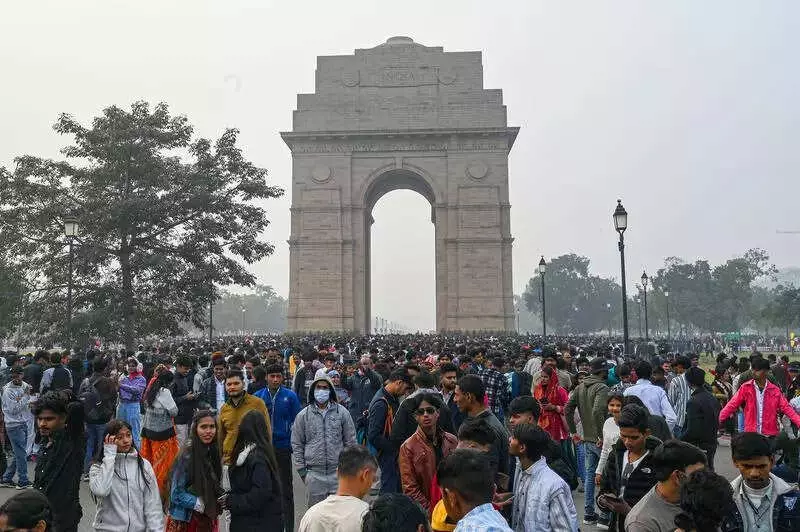
The first dawn of 2026 in Delhi was greeted not just with hope, but with the blaring of horns and the frustration of endless traffic jams. The capital city, known for its vibrant celebrations, found itself in a massive gridlock on Thursday, January 1, as residents poured onto the streets, overwhelming the road network and bringing large parts of the city to a standstill.
A Simple Plan Derailed by Classic Delhi Chaos
For 25-year-old Megha, the day began with a simple plan: a New Year's coffee with friends at Khan Market before heading to work. However, her journey from Connaught Place turned into a 35-minute drive, followed by a frustrating 20-minute hunt for parking in the market's narrow lanes. The return trip was far worse. A mere 5-kilometer drive stretched over an hour, with Megha stuck for nearly 30 minutes on Mathura Road outside the Delhi Zoo. "It felt like the whole city stepped out at the same time," she remarked, capturing the sentiment of countless others.
City-Wide Gridlock and Overflowing Pavements
The traffic paralysis was widespread. Key locations across central and south Delhi became pressure points one after another:

- India Gate's C-Hexagon was among the first to choke.
- Connaught Place's inner and middle circles quickly followed.
- The chaos spread to Akshardham, Lajpat Nagar, W Point, Outer Ring Road near Majnu ka Tila, Khan Market, Vikas Marg, Ring Road, and Netaji Subhash Marg near Red Fort.
The situation was worsened by the sheer volume of people and vehicles. Auto-rickshaws and e-rickshaws halted mid-road to drop passengers. Cars were trapped in clogged lanes. With footpaths overflowing, pedestrians were forced to walk on busy roads, weaving between stationary vehicles.
Commuters from NCR cities like Noida found no respite. Ashna, traveling from Noida to her office in the afternoon, took 20 minutes to cross a short stretch near Akshardham. She noted the footpaths were packed, a scene far worse than the usual traffic there.
Social Media Outcry and Strained Infrastructure
As delays mounted, social media platforms became live complaint boards. Users reported severe jams at Bangla Sahib Chowk near CP, on Mathura Road near Nizamuddin, and approaching the Sai Baba Temple, criticizing the lack of traffic regulation and poor planning. Reports of congestion poured in from Rohini to central Delhi, including near the Iskcon Temple and Rithala metro station.
Delhi Traffic Police officials stated that over 800 personnel were deployed at key locations. However, managing the simultaneous peak of pedestrian and vehicle movement proved extremely difficult. A senior official explained that congestion escalates rapidly when crowd movement and vehicle density rise together.
The crush extended beyond roads. Several central Delhi metro stations recorded unusually high footfall as people sought escape from the surface chaos. Stations like Central Secretariat, Udyog Bhawan, Patel Chowk, Rajiv Chowk, Akshardham, Khan Market, and Pragati Maidan saw packed platforms and long queues, especially in the evening. Metro officials attributed the surge to New Year outings, given these stations' proximity to India Gate, CP, and cultural hubs.
By late evening, as crowds finally thinned, traffic began to ease on most arterial roads. But the message from the first day of 2026 was clear: in a city that celebrates with full fervor, even a short outing can transform into an arduous, hours-long journey.