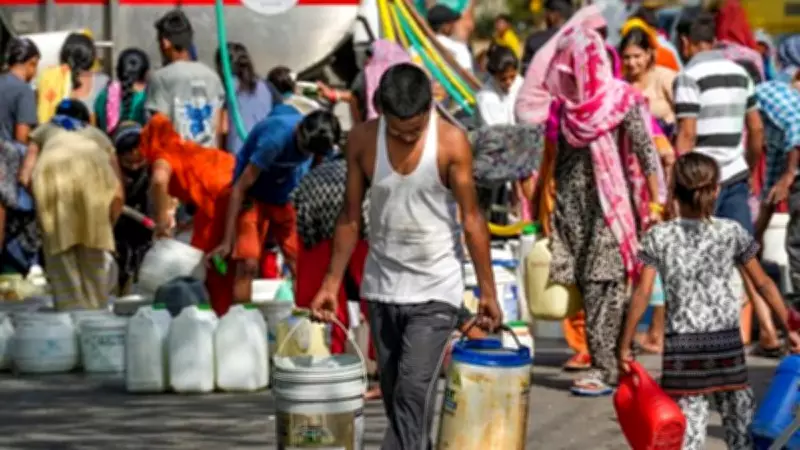
Delhi is grappling with a severe water crisis as the Yamuna river water level at the Wazirabad barrage has fallen significantly below the normal mark, disrupting water supply across the national capital. The situation has led to acute water shortages in several parts of the city, with residents facing hardships in accessing clean drinking water.
Yamuna Level Drops at Wazirabad
The water level at the Wazirabad reservoir, which is a key source of raw water for Delhi's treatment plants, has dropped to a critically low level. According to officials, the level is nearly 671.5 feet, which is well below the normal requirement of 674.5 feet. This decline has severely impacted the production capacity of water treatment plants, leading to a reduction in supply to various areas.
Impact on Water Supply
The low water level has forced the Delhi Jal Board (DJB) to cut water supply in many parts of the city. Areas such as South Delhi, West Delhi, and parts of Central Delhi are experiencing reduced water pressure and intermittent supply. Residents have reported that they are receiving water only for a few hours a day, and in some cases, no water at all. The situation is particularly dire in low-lying areas and unauthorized colonies.

Reasons Behind the Crisis
Officials attribute the current crisis to a combination of factors, including insufficient rainfall in the Yamuna catchment area, reduced release of water from upstream dams, and increased demand due to the summer heat. The lack of adequate monsoon rains has led to lower river flows, while the rising temperatures have escalated water consumption. Additionally, the release of water from the Hathnikund barrage has been inadequate to meet Delhi's requirements.
Government Response
The Delhi government has taken several steps to mitigate the crisis. The DJB has implemented a rationing system, prioritizing supply to hospitals, essential services, and vulnerable areas. Tankers are being deployed to supply water to affected neighborhoods. Chief Minister Arvind Kejriwal has urged the Haryana government to release more water from the Hathnikund barrage to ease the situation. He also appealed to residents to use water judiciously and avoid wastage.
Public Outcry
The water shortage has sparked protests in several parts of the city. Residents have held demonstrations, demanding immediate action from the authorities. Social media is abuzz with complaints and pleas for help. Many have criticized the government for not doing enough to address the crisis, pointing to the lack of long-term planning for water security.
Long-Term Solutions
Experts emphasize the need for sustainable solutions to Delhi's water woes. They suggest measures such as rainwater harvesting, recycling of wastewater, and better management of the Yamuna river. The government has announced plans to revive old water bodies and construct new reservoirs to enhance water storage capacity. However, these projects will take time to materialize, and in the short term, the city remains vulnerable to such crises.
As the summer progresses, the situation may worsen if rainfall remains below normal. The Delhi government is closely monitoring the water levels and is prepared to take further measures, including the possibility of imposing water cuts in non-essential sectors. Citizens are advised to stay informed about the water supply schedule and cooperate with the authorities to tide over the crisis.