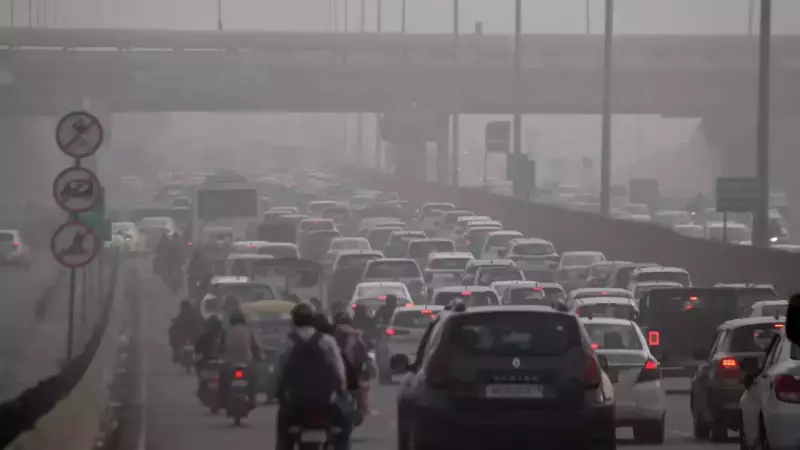
In a significant move offering relief to millions, the Commission for Air Quality Management (CAQM) has officially rolled back the stringent Stage 3 curbs of the Graded Response Action Plan (GRAP) across the National Capital Region. This decision, taken on Wednesday, comes as a direct response to a noticeable improvement in the region's air quality over the past three days.
What Led to the Decision?
The trigger for revoking the severe restrictions was a marked shift in the pollution levels. The 24-hour average Air Quality Index (AQI) for Delhi was recorded at 327, which falls squarely within the 'Very Poor' category. This reading is crucially just below the 'Severe' category threshold (AQI 401-450), which is the legal benchmark for imposing Stage 3 measures in the first place. The GRAP is a tiered system activated during winter to combat pollution, with stages ranging from Stage 1 (Poor) to the most stringent Stage 4 (Severe Plus).
What Restrictions Are Now Lifted?
The most immediate and impactful outcome of this rollback is the suspension of the ban on plying BS-III petrol and BS-IV diesel vehicles in Delhi. This prohibition, a key component of Stage 3, had significantly impacted a large number of motorists in the capital.

What Rules Still Remain in Force?
While the heavy-handed Stage 3 is off the table, the air quality situation is far from resolved. The CAQM has made it clear that measures under Stage 1 and Stage 2 of the GRAP will continue to be strictly enforced. With the AQI still in the 'Very Poor' zone, these stages mandate a series of proactive measures.
Under Stage 1, authorities are focusing on stricter penalties for polluting vehicles, ensuring proper waste management to prevent open burning, and enhancing mechanical road sweeping and water sprinkling. Dust control norms at construction sites are also being rigorously monitored.
Stage 2 adds another layer of action, including more frequent road cleaning, ensuring an uninterrupted power supply to discourage the use of diesel generators, and temporarily hiking parking fees to nudge citizens towards public transport. Stricter financial penalties are also being levied on construction sites that fail to comply with dust control regulations.
The overall message from the authorities is one of cautious relief. While the immediate crisis has abated, the public is still urged to remain vigilant and cooperate with the ongoing measures to prevent the air quality from slipping back into the 'Severe' category.