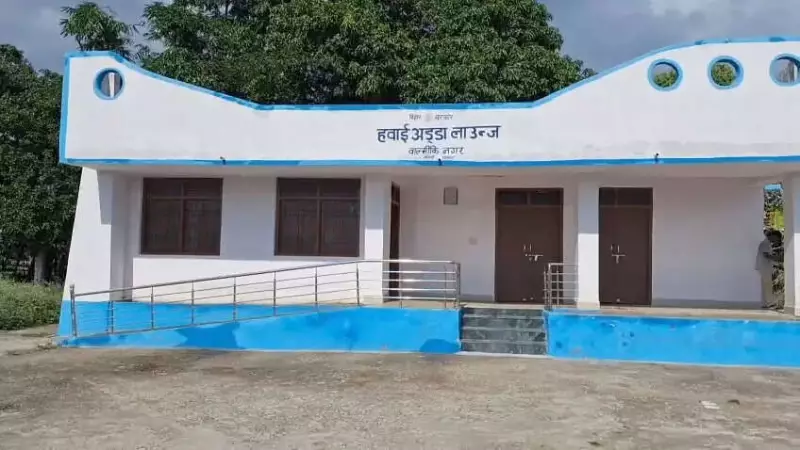
In a significant move to enhance regional air connectivity, the central government has intensified efforts to operationalize the long-dormant Valmikinagar airport in West Champaran, Bihar. This push follows a recent detailed inspection conducted by a technical team from the Airports Authority of India (AAI), rekindling hopes for economic and tourism growth in the area bordering Nepal.
From VIP Helipad to Public Airport: A Six-Decade Wait
The airport has a historical legacy but limited public utility. Originally built in 1964 alongside the Gandak barrage project, it was inaugurated by India's first Prime Minister, Jawaharlal Nehru. Despite its promising beginnings, the facility never opened for scheduled commercial flights. For decades, it has served primarily as a helipad for visiting ministers and VIPs, leading locals to dub it a "one-day airport." The latest inspection by AAI officials from Gorakhpur marks a concrete step towards changing this narrative.
Revenue officer Ravi Prakash Chaudhary, who was present during the inspection with officials from Bagaha-2 block, outlined the purpose. "The team studied the current condition to explore possibilities for expanding the runway and other infrastructure needed for regular commercial operations," he stated. The vision is to develop it as a small commercial facility under the government's UDAN (Regional Connectivity Scheme), initially catering to 19-seater aircraft.

Groundwork Begins: Soil Tests, Security, and Road Widening
Practical steps to transform the site are now underway. Chaudhary confirmed that technical work would commence shortly. "Soil testing of the airport land is expected in the next few days to preempt construction issues," he said. Initial cleanup operations, including removing wild vegetation and repairing the boundary wall, will also be undertaken to improve safety and cleanliness.
Security infrastructure is being planned robustly. A senior police officer of Deputy Superintendent of Police (DSP) rank will be stationed at the airport, supported by additional personnel for regular checks and law and order management.
Connectivity to the airport is also set for a major upgrade. The access road linking to the national highway will be widened to 40 feet and developed into a three-lane thoroughfare. This plan designates two lanes for general traffic and one reserved for VIP movement. Land acquisition for this project will follow due process, with compensation paid at prevailing market rates for any private land required.
Longer Runway, Broader Horizons: Economic and Tourism Impact
A key limitation identified is the length of the existing runway. AAI officials note the current 1,100-meter runway restricts aircraft operations. Plans are actively being made to extend it to accommodate larger aircraft, which is crucial for the airport's commercial viability.
The potential revival has generated palpable excitement among residents. Vinay Kumar Singh, a local from Valmikinagar, expressed the community's sentiment. He highlighted that reopening the airport would facilitate emergency travel, generate local employment, and significantly boost tourism. "Direct air connectivity will link the Valmiki Tiger Reserve (VTR) with the Kushinagar Buddhist Circuit, attracting more foreign tourists to our region," Singh added, outlining a promising synergy between natural heritage and religious tourism.
The revival of Valmikinagar airport represents more than just a new flight route; it is a catalyst for integrated regional development. By improving transport links, it aims to unlock the economic potential of West Champaran, enhance access to a critical tiger reserve, and strengthen cross-border connectivity with Nepal, fulfilling a vision delayed for nearly sixty years.