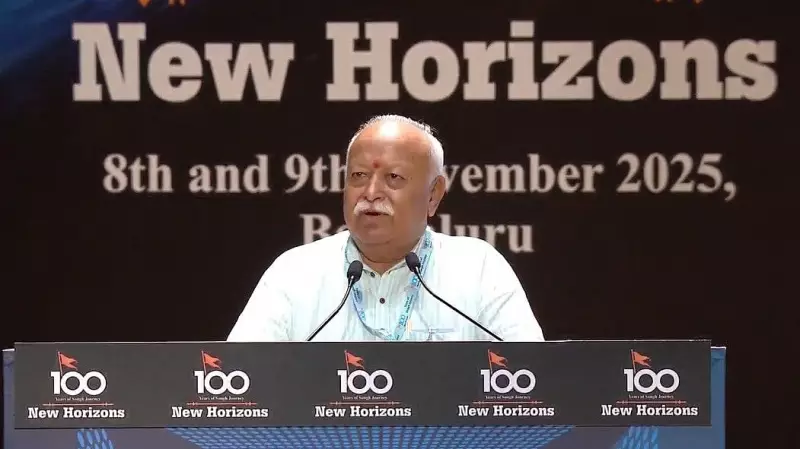
In a significant address that directly responded to the organization's critics, Rashtriya Swayamsevak Sangh (RSS) chief Mohan Bhagwat provided a clear definition of what the RSS represents. Speaking at an event, Bhagwat articulated that the RSS should be recognized as a "body of individuals" rather than any other type of organization.
Defining the RSS Identity
The RSS chief made these clarifying remarks during his speech at the launch of a book titled "The RSS: Roadmaps for the 21st Century" in New Delhi. Bhagwat emphasized that the organization comprises individuals who come together with shared values and objectives. He specifically addressed those who criticize the RSS without understanding its fundamental nature and purpose.
Mohan Bhagwat stated clearly that the RSS represents a collective of people bound by common ideals rather than an institution with rigid hierarchical structures. His comments come at a time when the organization frequently faces scrutiny and criticism from various quarters about its objectives and functioning.

Addressing Misconceptions and Criticism
During his address, the RSS chief tackled several misconceptions about the organization head-on. He explained that the RSS functions through the dedication of its members who work toward nation-building and social harmony. Bhagwat's statements served as both a clarification and a response to ongoing debates about the Sangh's role in Indian society.
The book launch event provided an appropriate platform for such important clarifications, with the publication itself detailing the RSS's vision for contemporary India. Bhagwat used this opportunity to communicate directly with both supporters and detractors about the true nature of the organization he leads.
Implications and Future Direction
Bhagwat's definition of RSS as a "body of individuals" carries significant implications for how the organization positions itself in public discourse. This characterization emphasizes the human element of the Sangh rather than presenting it as an abstract entity. The clarification helps in understanding the decentralized nature of the organization's functioning.
The timing of these statements is particularly important as the RSS continues to expand its influence across various sectors of Indian society. By defining itself clearly, the organization aims to address criticism more effectively and present a transparent picture of its objectives and methods.
This direct approach from the RSS chief signals a potentially new phase in the organization's communication strategy, where it engages more openly with questions about its identity and purpose. The emphasis on being a collective of individuals rather than a rigid institution may help reshape public perception and understanding of the nearly century-old organization.