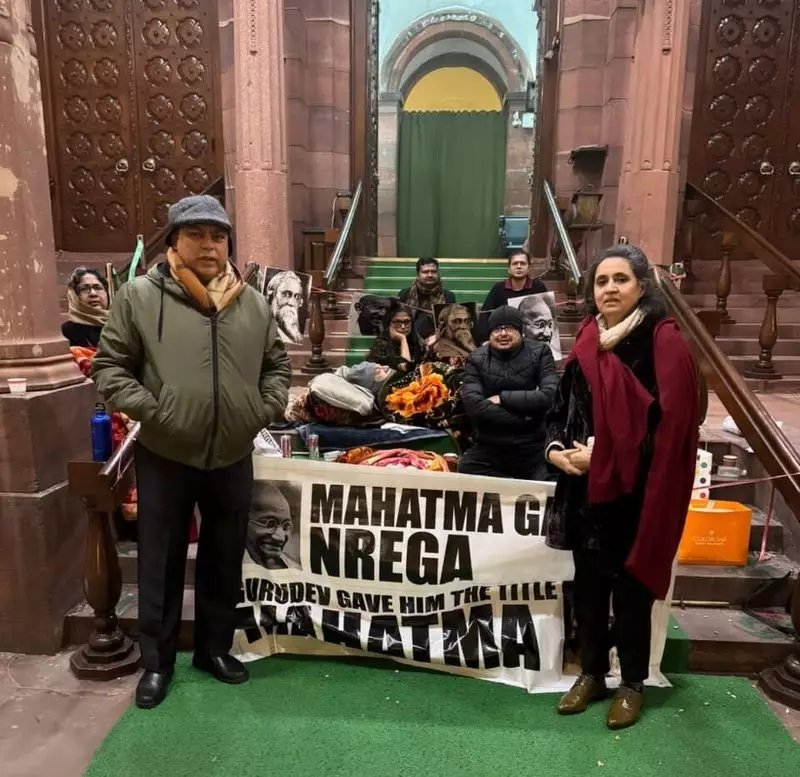
Members of Parliament from the Trinamool Congress (TMC) launched a significant 12-hour-long dharna, or sit-in protest, within the Parliament complex on Monday. The demonstration was a direct response to the passage of the Government of National Capital Territory of Delhi (Amendment) Bill, 2023, in the Lok Sabha, a move the party strongly condemns as an assault on democratic principles.
The Core of the Protest: The GNCTD Bill
The protest was triggered by the Lok Sabha's approval of the contentious GNCTD Bill, also referred to as the Delhi services bill. This legislation seeks to amend the existing framework governing the administration of the National Capital Territory of Delhi. The TMC, along with several other opposition parties, views the bill as a tool to drastically curtail the powers of the elected government of Delhi, led by Chief Minister Arvind Kejriwal, and to enhance the authority of the Lieutenant Governor, who is appointed by the central government.
The dharna commenced at 8 am and continued steadfastly until 8 pm, with Rajya Sabha MP Derek O'Brien leading the charge. The protesting MPs positioned themselves at the Gandhi statue, a traditional site for political demonstrations within the Parliament premises, voicing their staunch opposition to what they label an "undemocratic" piece of legislation.

Voices from the Dharna: Accusations and Defiance
Derek O'Brien, a prominent TMC leader in the Upper House, articulated the party's position with clarity and force. He accused the ruling Bharatiya Janata Party (BJP) government of systematically undermining India's federal structure and democratic institutions. "This bill is not just about Delhi; it is about the systematic murder of democracy and federalism across India," O'Brien stated during the protest.
He emphasized that the TMC's protest was a principled stand against the central government's tendency to bypass the will of the people. The MPs held placards and raised slogans condemning the bill, arguing that it effectively nullifies the verdict of the people of Delhi by stripping their elected government of essential administrative control.
Political Context and Broader Opposition
The TMC's solitary dharna highlights the fragmented yet intense opposition to the bill. While several opposition parties share the concern, the TMC chose to stage this specific, prolonged protest to draw national attention to the issue. The bill's passage in the Lok Sabha, where the BJP holds a majority, was a foregone conclusion, making the Rajya Sabha a crucial battleground.
The protest underscores the ongoing and fierce tussle between the central government and opposition parties over the balance of power in Delhi, a union territory with a unique semi-state status. The TMC's action is seen as part of a larger strategy to position itself as a leading voice against the BJP's policies at the national level.
Implications and the Road Ahead
The 12-hour dharna by TMC MPs is a significant act of parliamentary protest, signaling deep-seated discontent with the legislative process. It brings the debate over central overreach and states' rights sharply into focus. The protest concluded at 8 pm, but the political and legal confrontation is far from over.
The bill now awaits discussion and voting in the Rajya Sabha, where the government does not command an absolute majority. This sets the stage for a potentially heated debate and a close vote. The TMC has made it clear that it will continue to oppose the legislation vehemently in the Upper House, rallying other like-minded parties to its cause.
The outcome in the Rajya Sabha will be a critical test for both the government's legislative agenda and the opposition's ability to present a united front on issues of federalism and democratic autonomy. The TMC's day-long dharna has successfully amplified the controversy, ensuring that the GNCTD Bill remains a central topic of political discourse in the coming days.