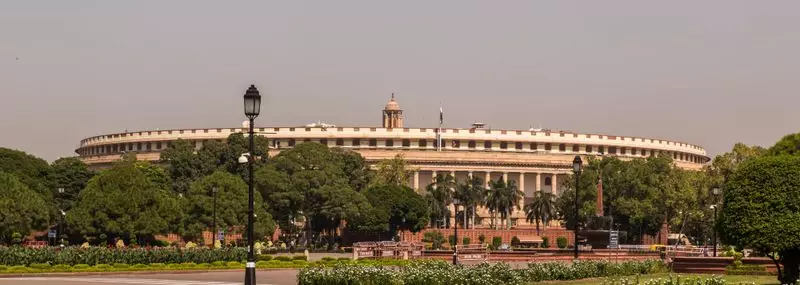
When major national scandals rock the country, India's Parliament possesses a powerful tool to uncover the truth: the Joint Parliamentary Committee. This investigative mechanism transforms the nation's legislature from a law-making body into an elite team of investigators with sweeping powers.
The Constitutional Basis of JPCs
The concept of Joint Parliamentary Committees finds its foundation in Article 105 of the Indian Constitution, which grants Parliament the authority to regulate its own procedures and conduct of business. While not explicitly mentioned by name, this constitutional provision provides the legal basis for Parliament to constitute committees with specific investigative mandates.
Historically, India has witnessed only five major JPC investigations since independence, reflecting the rarity and significance of such proceedings. These include the landmark investigations into the Bofors scandal (1987), securities scam (1992), stock market volatility (2001), pesticide residues in soft drinks (2003), and the 2G spectrum allocation (2011).

Unprecedented Investigative Powers
What makes JPCs particularly powerful is their extraordinary authority to function as mini-parliaments with comprehensive investigative capabilities. These committees can summon ministers, senior bureaucrats, and even corporate leaders to testify under oath. They possess the right to examine confidential government documents that would normally remain inaccessible to ordinary citizens or even regular parliamentarians.
The powers extend to demanding testimony from individuals who might otherwise claim privilege. Unlike regular parliamentary proceedings where ministers can refuse to answer questions by citing national interest, JPC witnesses face greater pressure to provide complete disclosures. The committees operate with quasi-judicial authority, though they cannot deliver legally binding verdicts.
Each JPC follows a structured investigation process beginning with its constitution through a parliamentary motion. The composition typically reflects the political balance in Parliament, with members drawn from both Houses and across party lines. The committee elects its chairman and establishes procedures for evidence collection, witness examination, and report preparation.
Historical Impact and Political Dynamics
The Bofors scandal investigation (1987) marked India's first major JPC, examining allegations of kickbacks in defense procurement. This set the precedent for how Parliament could investigate matters of national importance that transcended routine administrative failures.
The securities scam JPC (1992) delved into one of India's largest financial frauds, revealing systemic weaknesses in the banking system and leading to significant financial reforms. Similarly, the 2G spectrum JPC (2011) investigated what was then considered independent India's largest corruption scandal, though its final report faced criticism for being divided along political lines.
This political dimension represents both the strength and limitation of JPCs. While they bring multipartisan scrutiny to complex issues, the final reports often reflect the majority view of the ruling coalition, with opposition members frequently submitting dissent notes. The 2G spectrum JPC witnessed particularly sharp divisions, with multiple opposition members rejecting the majority conclusions.
JPCs vs. Other Investigative Mechanisms
Unlike judicial inquiries or Central Bureau of Investigation probes, JPCs offer distinct advantages. They operate with greater political legitimacy as direct representatives of the people's will. Their proceedings are generally more transparent than police investigations, with significant portions of testimony and findings becoming public.
However, JPCs also face limitations. They cannot initiate criminal prosecutions directly, though their findings can provide the basis for subsequent legal action. The duration of investigations sometimes extends beyond reasonable timeframes, with the 2G spectrum JPC taking nearly three years to complete its work.

The political nature of these committees means that their effectiveness often depends on the prevailing atmosphere in Parliament. During periods of intense political polarization, JPC investigations risk becoming instruments of political combat rather than truth-seeking missions.
The Future of Parliamentary Investigation
As India faces increasingly complex governance challenges involving sophisticated financial transactions and cross-border dealings, the role of JPCs may evolve. The growing technical complexity of scandals necessitates that future committees incorporate domain experts and forensic specialists to complement political oversight.
The digital era presents both challenges and opportunities for parliamentary investigations. While electronic evidence requires specialized handling, digital documentation also creates clearer audit trails that can aid investigators. Future JPCs will need to adapt their methodologies to effectively scrutinize digital evidence and cyber-related offenses.
The enduring significance of Joint Parliamentary Committees lies in their unique position at the intersection of political accountability and investigative rigor. They represent Parliament's ultimate weapon to hold the executive accountable and restore public confidence during moments of national crisis. As democratic institutions worldwide face increasing scrutiny, India's experience with JPCs offers valuable insights into how legislatures can transform themselves into effective watchdogs when circumstances demand.