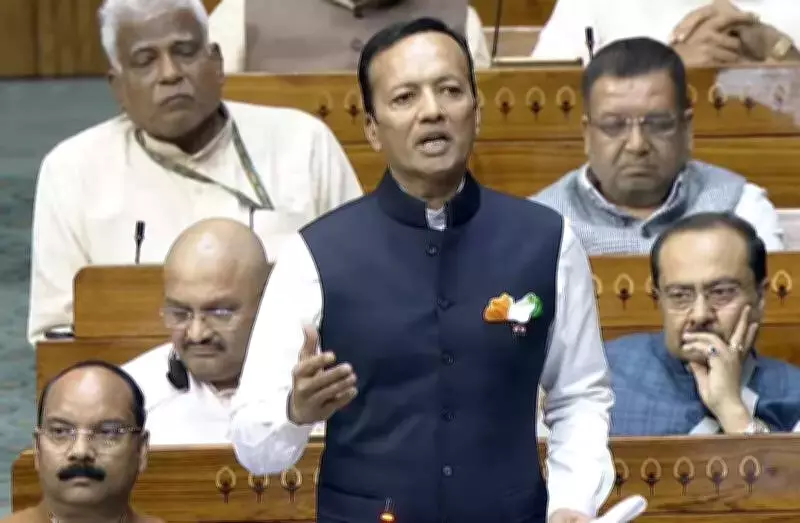
MP Naveen Jindal Champions Finance Bill 2026 as Transformative Blueprint for India
In a significant parliamentary address on Tuesday, Member of Parliament from Kurukshetra, Naveen Jindal, delivered a robust endorsement of the Finance Bill-2026 in the Lok Sabha. The legislator described the proposed legislation as a transformative and forward-looking roadmap that would decisively shape the future trajectory for India's 140 crore citizens.
A Bill for National Progress, Not Partisan Gain
Jindal emphatically stated that the bill transcends political boundaries. "This bill is not for any one party. It is for the future of the nation, and its benefits will reach every citizen," he declared. He positioned India's ongoing growth narrative as being fundamentally powered by a powerful synergy between the nation's taxpayers and its dynamic private sector, labeling both as indispensable partners in the monumental task of nation-building.
The Indispensable Engine: India's Private Sector
Highlighting the critical contribution of private enterprise, Jindal underscored its monumental role in the economy:

- Generating over 80% of the country's employment.
- Contributing more than 60% of India's Gross Domestic Product (GDP).
- Serving as the primary driver for innovation and enhancing global competitiveness.
He cited impressive benchmarks to illustrate this strength:
- IT exports have soared beyond the $200 billion mark.
- The pharmaceutical industry serves patients in over 200 countries worldwide.
- The startup ecosystem now boasts more than 100,000 recognized startups and over 100 unicorns.
"The private sector is not just a means of profit making; it is a strong pillar of nation building," Jindal asserted, reframing its role in the national context.
Taxpayers as Respected Partners, Not Suspects
Shifting focus to individual contributors, Jindal made a passionate appeal for respect towards taxpayers. "A taxpayer is not a suspect, but a partner in nation building. Their contributions must be respected," he emphasised. Drawing a parallel to his personal understanding of resilience, he compared India's economic fortitude to the unwavering perseverance of farmers who toil despite numerous challenges. He noted India's demonstrated capacity for a strong recovery amidst the triple crises of the Covid-19 pandemic, geopolitical tensions, and global supply chain disruptions.
Advocating for Holistic Development and Sustainable Practices
Jindal argued for a broader definition of development that moves beyond traditional economic metrics. He championed the greater promotion of natural farming practices to achieve multiple benefits:
- Reducing dependence on chemical fertilisers.
- Lowering the fiscal burden of subsidies.
- Ensuring healthier and more sustainable food systems for the population.
"We must look beyond numbers and focus on what we eat, the air we breathe, the water we drink, and the overall quality of life," he stated, stressing that true progress must be measured by tangible improvements in everyday living standards.
Proposing Key Reforms to Strengthen the Taxation Framework
While welcoming the provisions of the Finance Bill, the Kurukshetra MP proactively proposed several key reforms to strengthen India's taxation ecosystem and make it more citizen-friendly:
- Introduction of joint tax filing for families to simplify the process for households.
- Institutionalising dispute resolution mechanisms like "Vivad se Vishwas" to promote trust and reduce litigation.
- Promoting faster and more structured resolution of tax disputes to ease compliance burdens.
- Ensuring that all tax notices issued are simple, transparent, and respectful in nature, aligning with the vision of the taxpayer as a partner.
Jindal's comprehensive address positioned the Finance Bill 2026 as a cornerstone for future economic policy, intertwining fiscal strategy with social responsibility, environmental sustainability, and a profound respect for the contributors to India's economy.