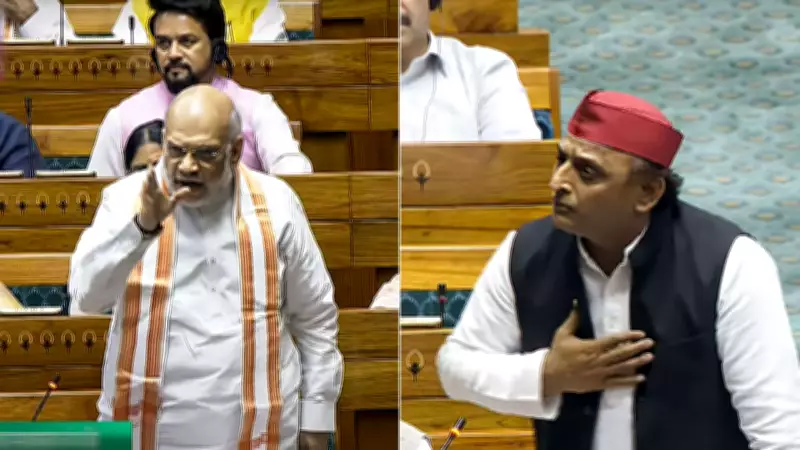
Women's Reservation Bill Sparks Intense Parliament Clash Over Quota Demands
In a fiery session of the Lok Sabha, Union Home Minister Amit Shah and Samajwadi Party leader Akhilesh Yadav engaged in a sharp confrontation regarding the implementation of the Women's Reservation Bill. The political debate has intensified over demands for specific quotas within the landmark legislation, with Shah making significant announcements about the ongoing census process.
Census to Include Caste Data, Shah Confirms
Addressing the House, Amit Shah revealed that the census process has officially commenced and will comprehensively include caste-based data collection. This announcement directly countered opposition allegations that the government was deliberately delaying the census to postpone the implementation of the Women's Reservation Bill. "The census is underway, and it will capture caste details as part of the exercise," Shah stated, emphasizing the government's commitment to a thorough demographic survey.
Shah Firmly Rejects Religion-Based Reservation
The Home Minister took a strong stance against demands for religion-based reservation within the Women's Reservation Bill framework. He categorically declared such proposals as "unconstitutional and against the secular fabric of our nation." Shah argued that the Constitution of India does not permit reservations based on religious identity, and any move in that direction would undermine the principle of equality enshrined in the document.

This position puts the government at odds with several opposition parties, including the Samajwadi Party, which has been advocating for broader inclusion criteria within the women's quota system. The disagreement has escalated the political discourse surrounding caste and quotas to new heights, with both sides digging in their heels.
Akhilesh Yadav's Counter-Demands
Akhilesh Yadav, representing the Samajwadi Party, has been vocal in pushing for additional provisions within the Women's Reservation Bill. His demands include:
- Specific sub-quotas for women from Other Backward Classes (OBCs)
- Reservation for women from minority communities
- Implementation mechanisms that ensure representation across social strata
Yadav's position reflects concerns that without these safeguards, the Women's Reservation Bill might primarily benefit women from already privileged backgrounds, thereby failing to address the representation gaps among marginalized groups.
Constitutional and Political Implications
The debate touches upon fundamental constitutional questions about equality, representation, and social justice. Legal experts note that while the Constitution provides for reservations based on social and educational backwardness, it explicitly prohibits discrimination based on religion. This legal framework forms the basis of Shah's argument against religion-based quotas.
Politically, the confrontation highlights the deepening divide between the ruling coalition and opposition parties on social justice issues. With general elections approaching, the Women's Reservation Bill has become a focal point for competing visions of inclusive governance.
Path Forward for the Women's Reservation Bill
Despite the heated exchanges, both sides acknowledge the importance of the Women's Reservation Bill for gender equality in Indian politics. The legislation aims to reserve one-third of seats in the Lok Sabha and state legislative assemblies for women, potentially transforming the political landscape.
The key questions remaining include:
- How will caste census data influence the implementation timeline?
- Can compromise be reached on sub-quotas without violating constitutional principles?
- What mechanisms will ensure genuine representation across social categories?
As Parliament continues its deliberations, the nation watches closely how this historic legislation will navigate the complex terrain of Indian social politics. The outcome will significantly impact women's political participation for generations to come.