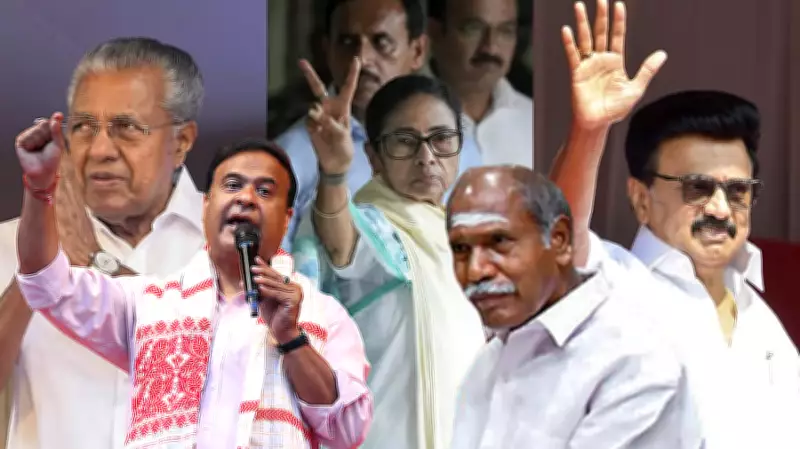
In a dramatic turn of events, West Bengal and Tamil Nadu have experienced tectonic political shifts that are reshaping the political landscape of India. The Bharatiya Janata Party (BJP) is now poised to form the government in West Bengal, ending decades of Trinamool Congress rule. Meanwhile, in Tamil Nadu, the Tamilaga Vettri Kazhagam (TVK), led by popular actor Vijay, is set to dethrone the long-standing Dravida Munnetra Kazhagam (DMK) government.
The Rise of the BJP in West Bengal
The BJP's ascent in West Bengal marks a significant change in the state's political dynamics. For years, the Trinamool Congress, under Mamata Banerjee, held a strong grip on power. However, a combination of factors, including anti-incumbency, internal dissent within the TMC, and the BJP's aggressive organizational strategy, has led to a shift in voter sentiment. The BJP capitalized on issues such as corruption, law and order, and cultural identity, appealing to a broad coalition of voters. The party's focus on grassroots mobilization and alliances with local leaders paid off, resulting in a decisive mandate.
Key Factors Behind the Shift
- Anti-incumbency: After years in power, the TMC faced growing dissatisfaction among voters over unfulfilled promises and administrative failures.
- Organizational Strength: The BJP's well-oiled machinery, including door-to-door campaigns and digital outreach, effectively countered the TMC's traditional strongholds.
- Leadership Appeal: Prime Minister Narendra Modi's popularity and the party's national narrative resonated with a significant section of the electorate.
Tamil Nadu: Vijay's TVK Ends DMK's Reign
In Tamil Nadu, the political landscape has been dominated by the DMK and AIADMK for decades. However, the emergence of the Tamilaga Vettri Kazhagam (TVK), led by actor-turned-politician Vijay, has disrupted this bipolar system. Vijay's mass appeal, combined with a campaign focused on social justice, development, and anti-corruption, struck a chord with the youth and rural voters. The TVK's victory marks a new chapter in Tamil Nadu politics, ending the DMK's tenure and signaling the rise of a new political force.

Reasons for TVK's Success
- Charismatic Leadership: Vijay's star power and clean image attracted a large following, especially among first-time voters.
- Anti-Incumbency: The DMK government faced criticism over corruption scandals and lack of economic progress, paving the way for change.
- Effective Campaigning: The TVK used innovative campaign strategies, including social media and public rallies, to connect with voters across the state.
Implications for Indian Politics
These shifts have national implications. The BJP's win in West Bengal strengthens its position in the east and could influence future alliances. Meanwhile, the TVK's rise in Tamil Nadu introduces a new player in regional politics, potentially altering the balance of power in the state and at the national level. Both developments reflect a broader trend of voters seeking alternatives to established parties, driven by demands for accountability and change.
As the new governments prepare to take office, the focus will be on delivering on promises and addressing key issues such as economic growth, infrastructure, and social welfare. The winds of change have blown, and the political landscape of India continues to evolve.