Vikramaditya Singh Stands With Villagers on Land Acquisition Issue
Himachal Pradesh Public Works Department Minister Vikramaditya Singh has thrown his weight behind villagers opposing land acquisition for the proposed Jathiya Devi mountain township. The minister made his position clear after the Bagi Gram Panchayat passed a resolution against the acquisition of fertile agricultural land.
Minister's Firm Stance on Villager Consent
Vikramaditya Singh, who represents Shimla (Rural) constituency, stated unequivocally that authorities must explore other options if villagers do not wish to sell their land. "If the villagers don't want to sell their fertile agricultural land, the authorities will have to explore other options," the minister told The Indian Express.
The minister emphasized that any development project must prioritize local people. "Be any projects, township, industrial, etc., the local people should be given preference. The projects can't ignore the local people," he asserted.

Gram Panchayat's Unopposed Resolution
On January 10, the Bagi Gram Panchayat passed an unopposed resolution during a Gram Sabha meeting. The resolution clearly stated opposition to land acquisition for the Jathiya Devi township project. Although Vikramaditya Singh was scheduled to attend the meeting, he could not be present due to official commitments in Delhi.
"I assured the villagers and the entire Gram Sabha that the acquisition will not happen against their wishes and conditions," the minister said, confirming he had conveyed villagers' sentiments to concerned officials and the Department of Town and Country Planning.
Villagers Prepare for Further Action
Bagi Gram Panchayat up-pradhan Desh Raj revealed that villagers plan to escalate their protest. "In the coming days, we will also meet Governor Shiv Pratap Shukla to handover a memorandum," he stated.
Raj explained the villagers' primary concern: "Agriculture is the main source of our livelihood. We cannot allow the acquisition of our fertile land." This sentiment reflects the deep connection between local communities and their agricultural land in Himachal Pradesh.
Project Scope and Selected Villages
The proposed Jathiya Devi township involves significant land acquisition across multiple villages:
- Eight revenue villages from Bagi Gram Panchayat (out of 11 total villages)
- One village from adjoining Solan district
- All selected areas fall under Shimla (Rural) Assembly Constituency
The township's strategic location offers several advantages:
- Situated near State Highway 16 and National Highway 5
- Approximately 4 kilometers from Shimla Airport
- About 20-22 kilometers from ISBT, Shimla
- Elevation between 1,300 and 1,500 meters above sea level
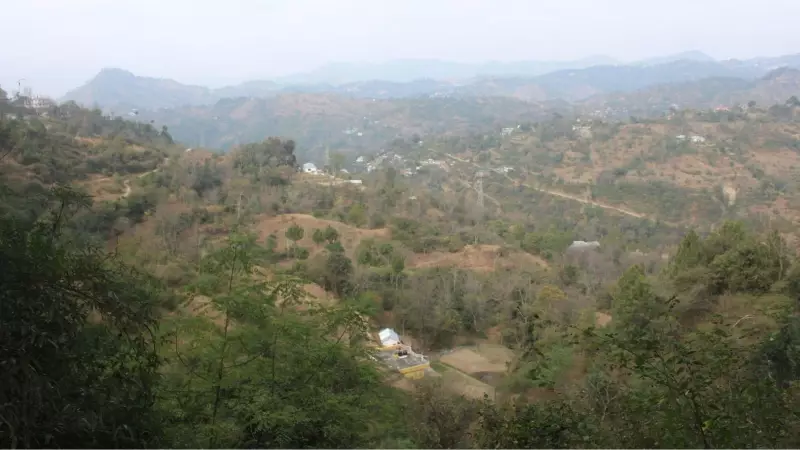
- Landscape features ridges, valleys, and seasonal streams
Detailed Township Planning
According to a Social Impact Assessment study conducted in November 2025, the township will span approximately 249 hectares. Government-owned land constitutes 35 hectares of this total area.
The first phase of development proposes:
- 895 residential units across various income categories
- Commercial and industrial components over 84.22 hectares
- Green and river development zones covering 33 hectares
Detailed land use planning includes:
- Residential zones (55.16 hectares) for HIG, MIG, LIG and EWS categories
- Commercial areas (13.36 hectares)
- Non-polluting industrial zones (15.7 hectares)
- Recreational and green zones (16.42 hectares)
- River development areas (16.56 hectares)
- Widened roads (13.78 hectares)
The township design incorporates modern infrastructure features including utility services, smart transport systems, helipad connectivity, and eco-sensitive planning. Despite these comprehensive plans, the project faces strong local opposition centered on preserving agricultural land and respecting community wishes.

The minister's support for villagers marks a significant development in this ongoing land acquisition dispute. His statement establishes a clear principle: development projects must proceed only with local consent, especially when they involve fertile agricultural land that sustains community livelihoods.