Uttarakhand CM Dhami Alleges West Bengal Govt Is Radicalizing Youth as 'Bhattaveer'
In a sharp political attack ahead of the West Bengal assembly elections, Uttarakhand Chief Minister Pushkar Singh Dhami has accused the Mamata Banerjee-led state government of deliberately transforming the youth into what he termed 'Bhattaveer'. This controversial statement has ignited a fresh wave of political debate, with implications for the electoral landscape in West Bengal.
Dhami's Allegations and the Context of West Bengal Polls
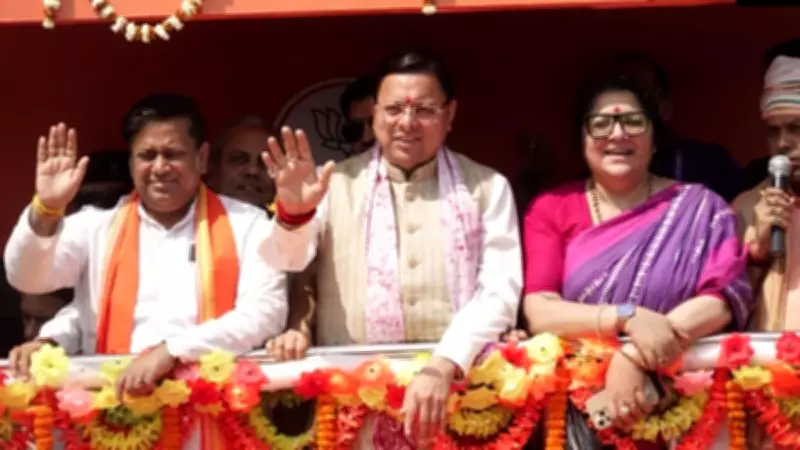
Chief Minister Pushkar Singh Dhami made these remarks during a recent public address, where he claimed that the Banerjee administration is actively encouraging a culture that fosters radicalism among young people. The term 'Bhattaveer', which loosely translates to 'warrior of the land', is being interpreted by political analysts as a reference to militant or extremist tendencies. Dhami emphasized that this alleged strategy is part of a broader effort to influence the upcoming state polls in West Bengal, scheduled for later this year.
He stated, "The West Bengal government is systematically making the youths 'Bhattaveer', which is a dangerous trend for the state's future." This accusation comes at a time when West Bengal is gearing up for a highly contested election, with the ruling Trinamool Congress facing off against the Bharatiya Janata Party and other opposition parties.

Political Reactions and Broader Implications
The allegations have drawn swift reactions from various political quarters. Supporters of the BJP have echoed Dhami's concerns, arguing that the West Bengal government's policies are undermining law and order and promoting divisive ideologies. On the other hand, leaders from the Trinamool Congress have dismissed the claims as baseless and politically motivated, accusing the BJP of trying to tarnish the image of the Banerjee government ahead of the elections.
Political experts suggest that such statements are indicative of the intense rivalry between the BJP and Trinamool Congress, with both parties vying for dominance in West Bengal. The use of terms like 'Bhattaveer' is seen as an attempt to polarize voters and highlight issues of governance and security. This controversy could potentially sway public opinion, especially among undecided voters who are concerned about youth radicalization and state stability.
Background on West Bengal's Political Climate
West Bengal has been a hotspot of political activity in recent years, with the BJP making significant inroads in the state during the 2019 general elections. The upcoming assembly polls are crucial for both the BJP and Trinamool Congress, as they will determine the future political direction of the state. Issues such as law and order, economic development, and social harmony are expected to be key battlegrounds in the election campaign.
Chief Minister Mamata Banerjee has consistently defended her government's record, pointing to initiatives aimed at youth empowerment and social welfare. However, critics, including Dhami, argue that these efforts are overshadowed by alleged instances of violence and radicalization. The debate over 'Bhattaveer' adds a new dimension to this ongoing political narrative, raising questions about the role of youth in state politics and the broader implications for national security.
Conclusion: A Contentious Election Season Ahead
As West Bengal prepares for the polls, the allegations made by Uttarakhand Chief Minister Pushkar Singh Dhami are likely to fuel further controversy and debate. The term 'Bhattaveer' has become a focal point in the political discourse, symbolizing the deep-seated tensions between the ruling party and the opposition. Voters will be closely watching how these issues unfold, with the outcome of the elections poised to have significant repercussions for the state's governance and its relationship with the central government.
In summary, Dhami's accusations highlight the intense political competition in West Bengal, underscoring the challenges of maintaining social cohesion in a polarized environment. The coming months will be critical in determining whether these allegations gain traction among the electorate or are dismissed as mere political rhetoric.