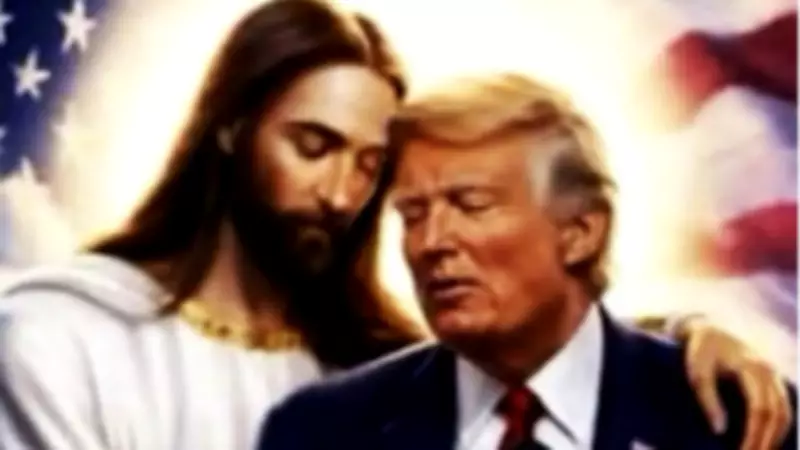
Trump Shares AI-Generated Image of Jesus Hugging Him, Ignites Fresh Controversy
Former US President Donald Trump stirred up another social media storm on Wednesday by sharing an artificial intelligence-generated image that depicts Jesus Christ embracing him. This move came just days after he faced significant backlash for posting a similar AI-created picture portraying himself as Jesus, highlighting ongoing tensions over his use of digital media.
Details of the Latest Post and Trump's Response
The image, originally posted on X by a supporter, was reshared by Trump on his Truth Social platform. Accompanying the post, Trump wrote, "The Radical Left Lunatics might not like this, but I think it is quite nice!!!" This statement underscores his defiant stance amid growing criticism from various quarters.
Wednesday's post follows intense scrutiny over an earlier AI-generated image that Trump shared on Sunday. That image showed him in flowing robes, appearing to heal a sick man with beams of light emanating from his hands. It was set against patriotic imagery, including a waving US flag, the Statue of Liberty, and eagles overhead, blending religious and national symbols in a provocative manner.

Backlash and Removal of the Previous Image
The Sunday post triggered swift and widespread backlash. Some far-right Christian figures accused Trump of blasphemy, arguing that equating himself with Jesus was disrespectful to religious sentiments. Meanwhile, liberal critics denounced it as "egomaniacal behavior," pointing to what they saw as an excessive focus on self-promotion.
By Monday morning, the image had been removed from Trump's Truth Social feed, though it continued to circulate and spark debates online. Trump later addressed the controversy, explaining his rationale for posting the image. He said, "I did post it, and I thought it was me as a doctor and it had to do with the Red Cross," adding that "it's supposed to be me as a doctor, making people better. And I do make people better. A lot better." He dismissed the criticism as "fake news," even as the post drew reactions from a broad spectrum of commentators.
Broader Implications and Public Reaction
This incident highlights the growing use of AI technology in political messaging and its potential to blur lines between reality and fabrication. The images have sparked discussions about:
- Ethical concerns over AI-generated content in politics.
- Religious sensitivities and how public figures engage with faith-based imagery.
- Media dynamics, with Trump leveraging platforms like Truth Social to bypass traditional news outlets.
As the controversy unfolds, it underscores the polarized nature of contemporary political discourse, where digital tools are increasingly used to shape narratives and provoke reactions. The repeated sharing of such images suggests a strategic approach to maintaining visibility and rallying support, despite the risks of alienating certain groups.