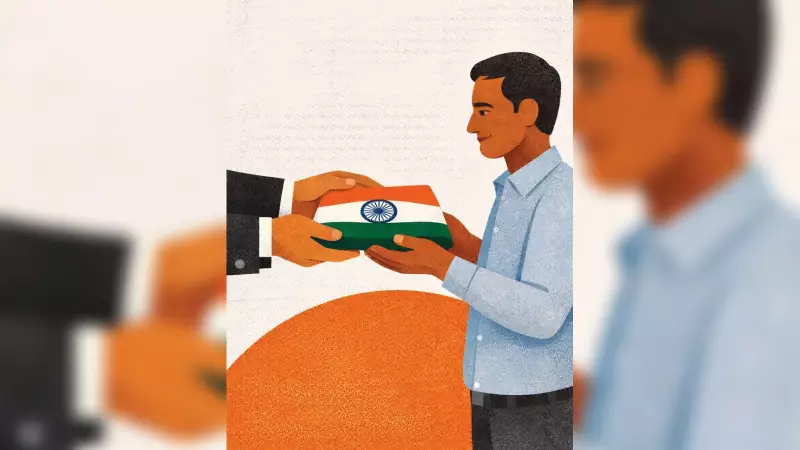
The Tricolour's Democratic Journey: From State Symbol to Citizen's Right
The national flag of India has undergone a remarkable transformation from a revered state symbol to a fundamental expression of citizen rights, reflecting the nation's evolving democratic consciousness. This journey, spanning from the early vajra flag designed by Sister Nivedita to the landmark legal battles led by Naveen Jindal, demonstrates a profound continuity in India's democratic imagination.
Historical Foundations and Early Restrictions
India's tryst with the tricolour officially began on July 22, 1947, when the nation received its national flag. During the struggle for Independence, the flag gained powerful meaning as a symbol of resistance against colonial rule. However, after Independence, while the flag remained a revered national emblem, it was not necessarily viewed as directly connected to citizens' civic rights. The Constituent Assembly and freedom movement leaders recognized the flag as a marker of constitutional belonging rather than a sectarian symbol, yet access to it remained restricted for ordinary citizens.
The Flag Code of India and related laws sustained a culture of government control that limited civic engagement with the national symbol. This approach inadvertently restricted democratic participation and deprived citizens of emotional ownership of their flag, creating a gap between state symbolism and citizen connection.

The Legal Battles That Transformed Access
The turning point in the flag's democratization came through determined civic action. On January 23, 2026, India marked the 22nd anniversary of the Supreme Court's landmark judgment in Union of India vs Naveen Jindal. This ruling recognized citizens' fundamental right to fly the national flag as part of the freedom of speech and expression guaranteed by the Constitution.
The legal journey began when Naveen Jindal, inspired by his experience proudly displaying the Indian flag daily as student government president at the University of Texas, Dallas, challenged restrictive provisions. After hoisting the flag at the Jindal Strips factory on January 26, 1993, government officials insisted it be taken down since the Flag Code then allowed private citizens to display the national flag only on specific national days.
Jindal's subsequent writ petition in the Delhi High Court led to a 1995 ruling that the Flag Code couldn't restrict citizens from flying the national flag year-round. When the Centre appealed to the Supreme Court, the apex court's 2004 judgment upheld this decision, establishing a constitutional right to respectfully display the flag.
Legislative Milestones and Civic Engagement
This judicial recognition was complemented by legislative action. Last year marked the 30th anniversary of the Delhi High Court judgment and the 20th anniversary of amendments to the Prevention of Insults to National Honour Act, 1971, which enabled citizens to respectfully display the national flag on apparel. These developments represent a confluence of law, legislative processes, and civic engagement that created significant milestones in democratizing India's national symbol.
The idea of the national flag has evolved through public debates since Independence. In 1947, Hansa Mehta presented the national flag as a tribute to Indian women's contributions to Constitution-making. Decades later, Jindal drew inspiration from this foundational vision, recognizing that citizens needed access to the flag to fully appreciate its significance.
Beyond Legal Recognition: Building Emotional Connections
Judicial recognition alone didn't complete the democratization process. Naveen and Shallu Jindal established the Flag Foundation of India to take the flag to every corner of the country and strengthen people's emotional connection with it. This initiative reflects the understanding that true democratization requires both legal rights and cultural integration.
The act of flying the national flag represents an exercise in civic responsibility—an example of dhvaja upasana, or the resolve that national symbols must live within the people. This practice reminds citizens of their constitutional duties and obligations while embedding the idea of nation-building in everyday life.

A Shared Constitutional Inheritance
The national flag's journey from Sister Nivedita's vajra flag to Naveen Jindal's legal victory reflects remarkable continuity in India's democratic imagination. These contributions remind us that the tricolour is not merely a symbolic object of the state but a shared constitutional inheritance that binds citizens through rights, responsibilities, and democratic participation.
The story of Jindal's challenge to restrictive laws stands as a stellar example of citizens accessing democratic institutions to uphold fundamental rights. It demonstrates how determined civic action can transform state-controlled symbols into markers of citizen empowerment, strengthening the very fabric of Indian democracy.