Shashi Tharoor Decries Coarsening Political Debate Amid Controversy Over Kharge's Remarks
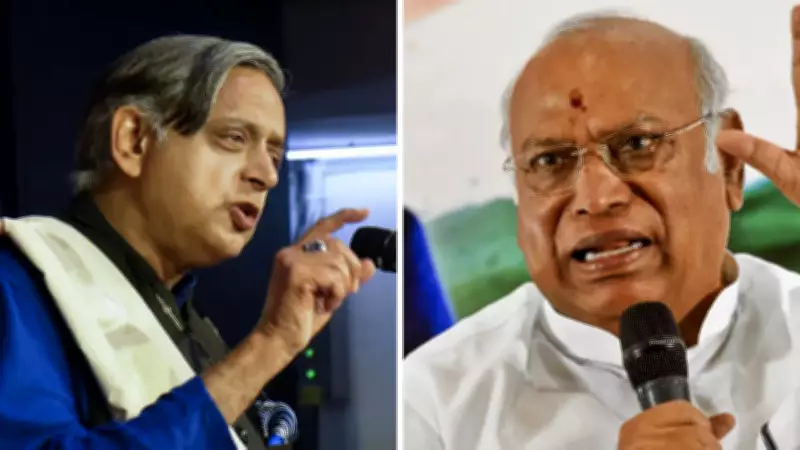
Congress leader and Thiruvananthapuram MP Shashi Tharoor on Tuesday voiced strong disapproval of the declining quality of political discourse in India, emphasizing that "standards should not be lowered" to match those using inflammatory language. His comments came as the Bharatiya Janata Party launched a fierce attack on Congress president Mallikarjun Kharge for his recent statement suggesting voters in Kerala are "educated and clever" and cannot be misled, unlike those in Gujarat and other regions.
Tharoor's Call for Elevated Political Standards
Responding to questions about Kharge's controversial remarks, Tharoor articulated his longstanding concern about the erosion of civil political dialogue. "The quality of political discourse is going down; our standards should not be lowered to that of those who use bad language," he stated firmly. Tharoor highlighted broader issues, noting past instances where legal actions were taken against political figures for hate speech, including cases involving the Assam chief minister.
"In general, I have deplored in the past the decline in political discourse. We have even seen cases filed against the Assam chief minister for hate speech. That should not be the direction of our politics. And I must say our standards should not be lowered to that of those who use bad language in politics," Tharoor elaborated. He appealed for a more respectful approach, urging politicians to present substantive reasons to voters rather than resorting to language that "coarsens the public debate."

Kharge's Rally Remarks Spark BJP Fury
The controversy originated from Kharge's address at a rally in Kerala's Idukki district, where he asserted that the people of Kerala possess superior awareness compared to voters in Gujarat. "Don't misguide the people of Kerala. They are very clever, they are educated. Modi ji, Vijay (Chief Minister Pinarayi Vijayan), you both can fool those who are illiterate in Gujarat or other places, but you can't fool Kerala people," Kharge declared, drawing immediate condemnation from the BJP.
BJP's Strong Rebuttal Defending Gujarat
The BJP reacted vehemently, interpreting Kharge's comments as a direct insult to Gujarat's six crore residents and its rich historical legacy. Gujarat Deputy Chief Minister Harsh Sanghavi took to social media platform X to deliver a scathing response, questioning the Congress's apparent animosity toward Gujarat.
"The land of Gujarat that gave the country Mahatma Gandhi, the Gujarat that gave the country the Iron Man Sardar Patel, the Gujarat that gave the country's most popular PM Narendra Modi, the Gujarat that showed a new model of development to the entire world—an insult to its 6 crore Gujaratis? Why does Congress hate Gujarat so much? Why do you keep targeting the people of Gujarat time and again? Did the people of Gujarat throw you out of power, and is this revenge? This statement doesn't show your frustration—it reveals your true stature," Sanghavi posted.
He further asserted that Gujarat's politically aware electorate has consistently rejected the Congress and will continue to do so, vowing that "Gujarat will not forgive" such perceived disrespect toward the state revered as the birthplace of Gandhi and Patel.
Political Context: Kerala Assembly Elections Loom
This heated exchange occurs against the backdrop of the upcoming Kerala Assembly elections, scheduled for April 9, with results to be announced on May 4. The political landscape in Kerala is characterized by intense competition between the CPM-led Left Democratic Front (LDF) and the Congress-led United Democratic Front (UDF), both vying for control of the 140-seat legislative assembly. Tharoor's intervention underscores the heightened tensions and strategic positioning as parties gear up for the electoral battle, with national figures being drawn into state-level controversies.
The episode highlights deeper fissures in Indian political rhetoric, with Tharoor positioning himself as a advocate for more dignified and issue-based campaigning, even as partisan clashes over regional pride and voter intelligence intensify in the run-up to crucial state polls.