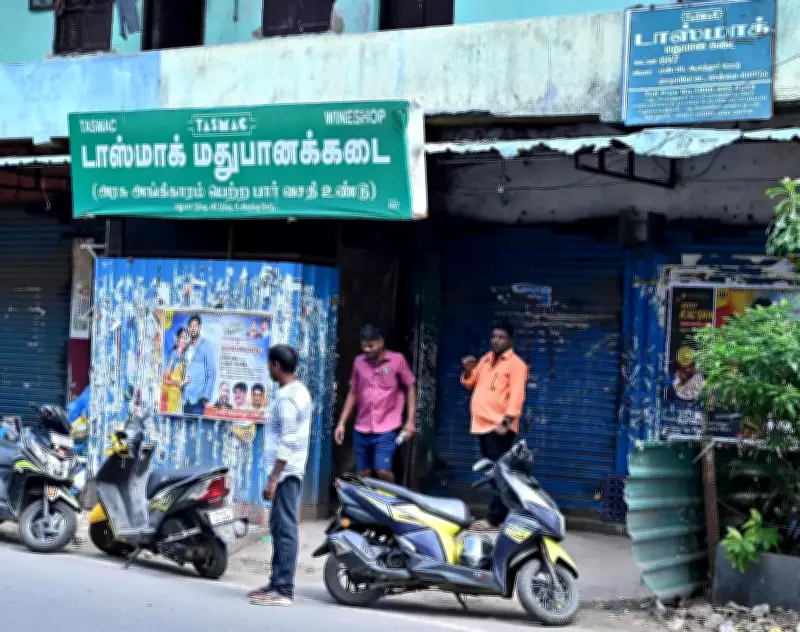
A one-day strike by employees of the Tamil Nadu State Marketing Corporation (Tasmac) led to the closure of 213 liquor retail outlets across Coimbatore district on Wednesday, disrupting sales estimated at Rs 8.5 crore, according to officials and union representatives.
Strike Details and Employee Grievances
John, the convenor of the Coimbatore Zone Tasmac Joint Action Committee, stated that employees have been working for 23 years without statutory social security benefits and without permanent employment status, unlike workers in other government departments. Although wages have been revised approximately 20 times during this period, many workers still earn only about Rs 15,000 per month, highlighting their precarious financial condition.
John alleged that workers are forced to cover operational expenses from their own pockets, including electricity bills, shop rent, and payments to labourers for unloading bottles. He also pointed out the absence of compensation for collecting empty bottles, claiming that this financial pressure contributes to violations of maximum retail price (MRP) norms. Furthermore, he cited the lack of proper toilets and inadequate space at outlets, forcing staff to work in cramped conditions.

Staffing Imbalances and Demands
John noted that successive governments have shut down some Tasmac shops after coming to power, but employees from closed outlets are typically redeployed to locations that already have surplus manpower. He highlighted an imbalance in staffing, with approximately 7,000 personnel in place against 4,200 sanctioned supervisor posts.
The committee has put forward several demands, including that employees from shuttered outlets be accommodated in alternative departments based on their educational qualifications and preferences. Additionally, they want the empty bottle return scheme to be handed over to private agencies. Other demands include an eight-hour workday, regularisation of jobs, weekly holidays, and Employee State Insurance (ESI) benefits.
The strike underscores the ongoing challenges faced by Tasmac employees, who continue to seek better working conditions and job security after more than two decades of service.