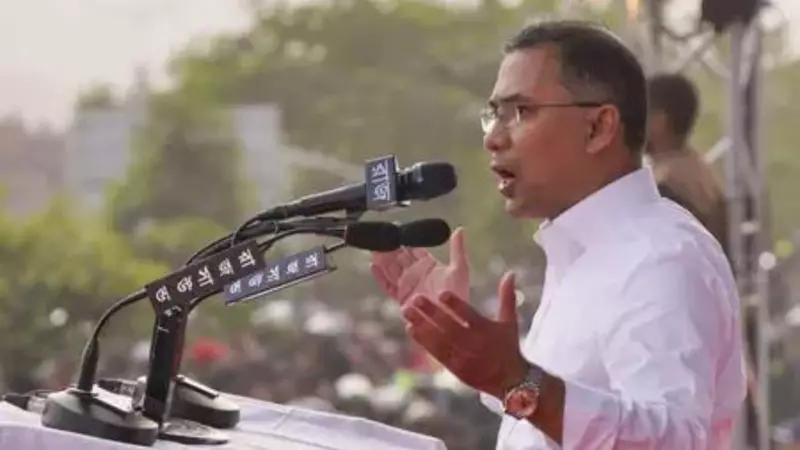
In a significant statement, Tarique Rahman, the acting chairperson of the Bangladesh Nationalist Party (BNP) and son of former Prime Minister Khaleda Zia, has underscored the foundational role of the 1971 Liberation War for the nation. He asserted that the very existence of Bangladesh as a state and its political identity are unimaginable without this pivotal historical event, which saw the country, then East Pakistan, gain independence with India's assistance.
A Call for National Unity and Forward Momentum
Tarique Rahman, who is poised to take the helm of the country's largest political party, addressed these remarks during a meeting on Monday with leaders from the Democratic United Front, a coalition of Left-leaning parties. He pointed to the new political landscape shaped by the recent 2024 public movement that led to the collapse of the Sheikh Hasina-led government, terming it an "uprising."
He emphasized that this fresh political reality presents crucial possibilities that must be harnessed to propel the nation forward. "Everyone, including the government and the opposition, must work together to move the country forward," Rahman stated, highlighting the imperative for collaborative effort across the political spectrum.

Building a Liberal, Democratic Welfare State
Rahman stressed that the current juncture offers a vital opportunity to strengthen democracy in Bangladesh. His vision for the nation's future was further elaborated by Bazlur Rashid Firoz, the general secretary of the BASD, who was present at the meeting. Firoz relayed that Tarique Rahman outlined a plan to construct a liberal, democratic, and welfare-oriented state.
According to Firoz, Rahman expressed a commitment to working decisively towards this goal while drawing lessons from the past. A central tenet of this proposed political direction is placing the people at the heart of all governance and policy. "The people will remain at the centre of their politics," Firoz concluded, summarizing the BNP leader's people-centric approach.
The statements signal a strategic positioning by the BNP leadership in the evolving political climate of Bangladesh, anchoring its narrative in the legacy of the Liberation War while advocating for unity and a progressive state model in the wake of recent governmental change.