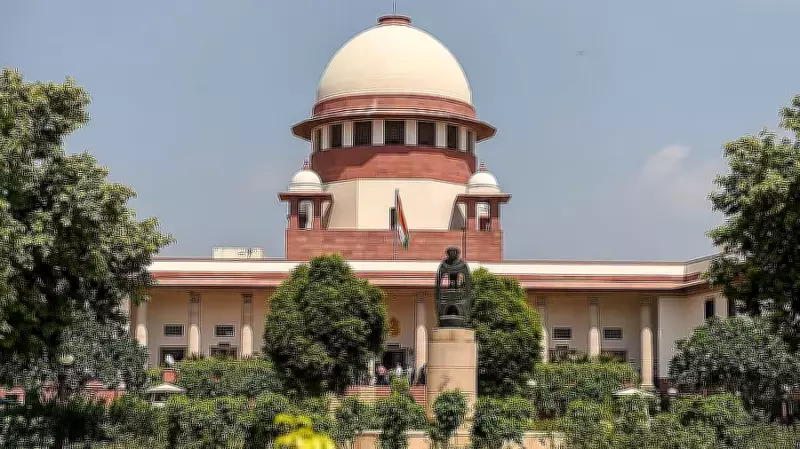
The Supreme Court of India has voiced deep concern over the persistent patriarchal preference for male children in society, emphasizing the need for stringent enforcement of the Pre-Conception and Pre-Natal Diagnostic Techniques (PCPNDT) Act. A bench comprising Justices Sanjay Karol and Prashant Kumar Mishra made the observations while hearing a case related to the Act's implementation.
Judicial Observations and Cultural References
The bench invoked the poem 'Balika ka Parichay' by renowned Hindi poet Subhadra Kumari Chauhan, which celebrates a mother’s joy at the birth of a daughter. The judges also quoted the ancient Sanskrit dictum from Manusmriti: “Yatra naryastu pujyante ramante tatra devata” (where women are honoured, divinity blossoms). These references underscored the cultural and spiritual value of women in Indian tradition.
Concerns Over Gender Discrimination
The court expressed alarm over the continuing societal bias that favours male children, leading to skewed sex ratios and gender-based discrimination. It stressed that the PCPNDT Act, which prohibits sex determination and selection, must be implemented rigorously to curb female foeticide and ensure the protection of the girl child.

- The bench highlighted that despite legal provisions, the preference for male children persists in many parts of the country.
- It called for greater awareness and sensitization among the public and medical professionals regarding the Act's provisions.
- The court directed authorities to strengthen monitoring mechanisms to detect and penalize violations effectively.
Need for Societal Change
Justice Sanjay Karol remarked that the law alone cannot change deep-rooted mindsets; a collective societal effort is required to value daughters equally. The court urged the government to launch awareness campaigns and educational initiatives to promote gender equality from the grassroots level.
The bench also noted that the PCPNDT Act, enacted in 1994, has been instrumental in reducing sex-selective abortions, but its full potential remains unrealized due to inadequate enforcement. It called for periodic reviews of the Act's implementation and stricter action against offenders, including doctors and clinics involved in illegal sex determination.
The Supreme Court’s observations come amid ongoing concerns over India's declining child sex ratio, which has improved marginally but remains alarming in several states. The court's strong message is expected to galvanize efforts to protect the girl child and uphold the constitutional principle of gender equality.