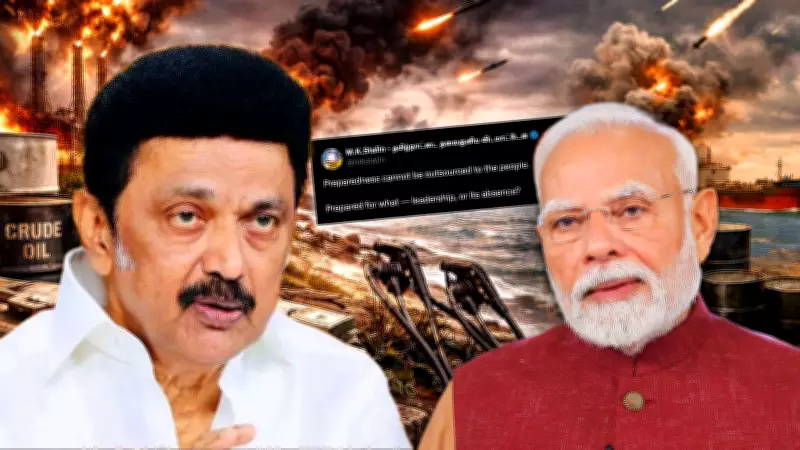
Tamil Nadu CM Stalin Challenges PM Modi's Preparedness Amid West Asia Conflict
Tamil Nadu Chief Minister MK Stalin has launched a pointed critique of Prime Minister Narendra Modi's recent appeal for citizens to brace themselves for potential repercussions from the ongoing West Asia conflict. Stalin's remarks come as political tensions escalate ahead of crucial policy discussions, with the opposition alleging that the central government has been slow to respond while states have taken early initiatives.
Stalin Questions Government's Readiness to Protect Citizens
In a sharp political attack, Stalin directly questioned whether the Modi-led government is adequately prepared to safeguard the Indian population from the fallout of the West Asia conflict. He highlighted several critical areas where he believes the government's preparedness is lacking, including energy security, potential trade disruptions, and comprehensive contingency measures. Stalin emphasized that while the Prime Minister has called for public preparedness, the government must first demonstrate its own capability to manage these challenges effectively.
Opposition Parties Accuse Centre of Delayed Response
According to opposition parties, several state governments have already implemented preliminary measures to mitigate the impact of the West Asia conflict, but the central administration has failed to provide a timely and coordinated response. This discrepancy has sparked a heated political debate, with critics arguing that the Centre's inaction could leave the nation vulnerable to economic and security risks. The controversy is unfolding as key policy discussions approach, adding urgency to the calls for transparent and proactive governance.

Key Concerns: Energy Security and Trade Stability
Stalin specifically pointed to energy security as a major concern, noting that disruptions in West Asia could affect oil supplies and prices, thereby impacting India's economy and daily life. Additionally, he raised alarms about possible trade disruptions that could hinder imports and exports, stressing the need for robust contingency plans. His critique underscores a broader demand for the government to outline clear strategies and demonstrate readiness to handle such international crises, ensuring the welfare of over 1.4 billion Indians remains a top priority.
Political Implications and Future Discussions
The exchange between Stalin and Modi is set against a backdrop of increasing political scrutiny, with opposition forces leveraging the issue to question the government's crisis management capabilities. As the debate intensifies, it is expected to influence upcoming policy discussions, potentially shaping India's approach to international conflicts and domestic preparedness. The situation highlights the ongoing tension between state and central authorities, emphasizing the need for collaborative and swift action in times of global uncertainty.