Supreme Court Observes Smooth SIR Implementation Across India, With West Bengal as Sole Exception
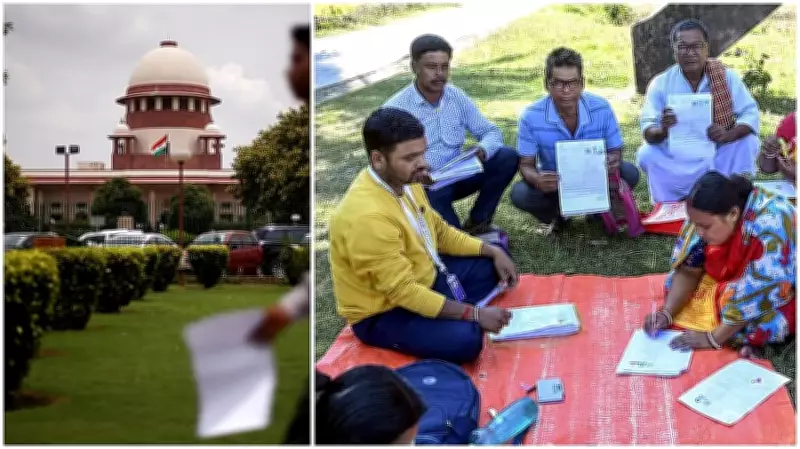
The Supreme Court of India has noted that the Special Intensive Revision (SIR) process was conducted smoothly and efficiently across the entire country, with the notable exception of West Bengal. This observation came during recent proceedings where the court reviewed the nationwide implementation of the SIR initiative.
Logical Discrepancy Applied Only to West Bengal, Says Senior Advocate
Senior advocate Kalyan Banerjee, representing the petitioners, brought to the court's attention a significant logical discrepancy in the application of SIR protocols. He stated that this inconsistency has not been applied to any other state in India, making West Bengal the sole region where the standard procedures were not followed uniformly.
The Supreme Court's remarks highlight a broader pattern of administrative divergence in West Bengal compared to other states. While the rest of the country adhered to the established SIR framework without major issues, West Bengal's implementation faced unique challenges that warrant further scrutiny.

Context and Implications of the SIR Process
The Special Intensive Revision is a critical administrative procedure designed to ensure accuracy and transparency in various governmental records and processes. Its smooth execution is essential for maintaining public trust and operational efficiency across different states.
This development raises important questions about regional compliance with national directives. The Supreme Court's observation underscores the need for consistent application of policies to avoid disparities that could affect governance and public services.
Key points from the proceedings include:
- The SIR was implemented successfully in all states except West Bengal.
- Senior advocate Kalyan Banerjee identified a logical flaw specific to West Bengal's case.
- The Supreme Court is monitoring the situation to ensure future compliance.
Broader Political and Administrative Ramifications
This incident is likely to have significant implications for Indian politics and state-center relations. West Bengal has often been at the center of political debates, and this discrepancy adds another layer to ongoing discussions about federalism and state autonomy.
As the Supreme Court continues to oversee the matter, stakeholders are urged to address the identified issues promptly. Ensuring uniform implementation of national policies remains a cornerstone of effective governance and national integration.