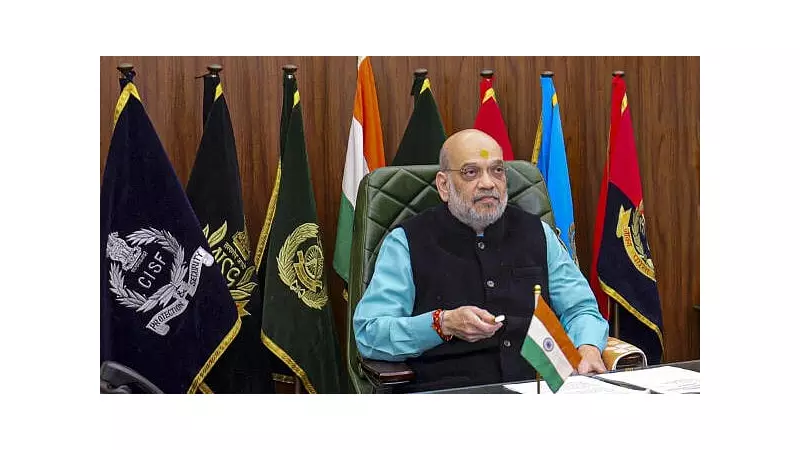
Union Home Minister Amit Shah has issued a stark warning regarding emerging security challenges in the southern state of Kerala. In a significant address, he pointedly questioned the activities and roles of organizations like the Social Democratic Party of India (SDPI) and Jamaat-e-Islami in the state's socio-political landscape.
Shah's Direct Challenge to Kerala's Political Fronts
During his remarks, Shah brought up the central government's decisive action in banning the Popular Front of India (PFI). He underscored a critical observation: both the ruling Left Democratic Front (LDF) and the opposition United Democratic Front (UDF) in Kerala had neither openly opposed nor supported the ban decision. This perceived neutrality from the state's major political coalitions, according to Shah, raises serious questions about their stance on national security matters.
Focus on Organisational Links and Activities
The Home Minister's comments put a spotlight on the alleged network and influence of certain groups. By naming the SDPI and Jamaat-e-Islami, Shah indicated the government's ongoing scrutiny of their operations within Kerala. His statement is seen as a continuation of the central administration's hardline approach towards organizations it perceives as threats to internal security and communal harmony.

The reference to the PFI ban, which was enacted due to allegations of unlawful activities, serves as a backdrop to this new warning. It signals that the government remains vigilant about the potential regrouping or ideological spread of banned outfits under different banners.
Implications for Kerala's Security and Politics
This warning from the country's top internal security official is poised to have significant repercussions. It directly brings national security concerns to the forefront of Kerala's political discourse. The charge that mainstream state parties remained ambiguous on the PFI ban is a potent political critique, likely to be leveraged in future electoral battles.
The statement, made on January 11, 2026, as reported by PTI, reinforces the Bharatiya Janata Party's (BJP) consistent narrative of positioning itself as the sole guarantor of India's security, especially in regions where its political footprint is still growing. For Kerala, a state with a complex political and social fabric, such high-level warnings from the Centre are likely to intensify debates on federalism, minority rights, and counter-terrorism strategies.
Analysts suggest Shah's remarks are a multi-pronged strategy: to keep security agencies alert, to pressure the state government for tighter coordination with central agencies, and to sway public opinion by highlighting a perceived security-policy vacuum among traditional state parties. The coming days may see heightened political rhetoric and possibly increased administrative actions in the state based on this renewed focus from New Delhi.