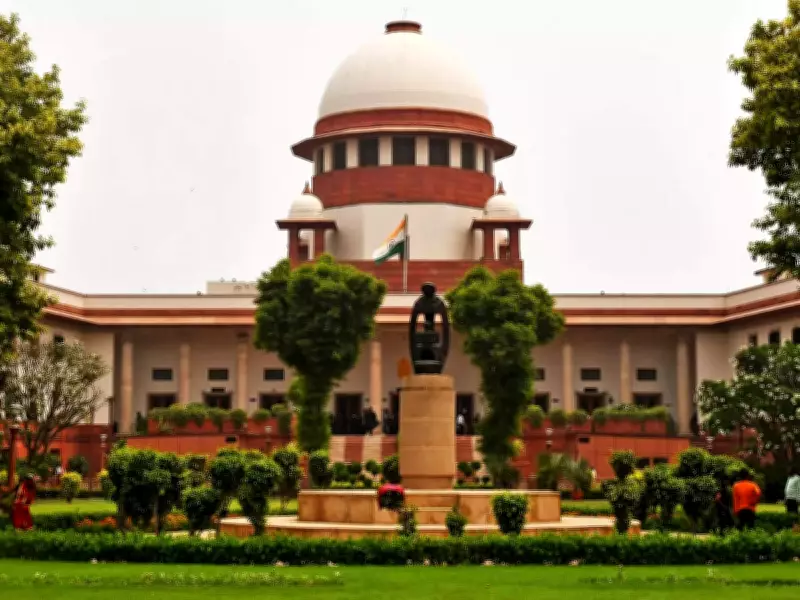
The Supreme Court on Friday raised concerns about the ongoing grant of reservation benefits to children from economically and educationally advanced families within backward classes. The bench, comprising Justices BV Nagarathna and Ujjal Bhuyan, observed that social mobility accompanies empowerment and that reservations cannot persist indefinitely for such sections.
Case Background
The court was hearing a plea challenging a Karnataka High Court judgment that upheld the exclusion of a petitioner from reservation benefits because both his parents are state government employees. The petitioner had been selected for an assistant engineer (electrical) post in the Karnataka Power Transmission Corporation Limited under the reserved category.
Court's Observations
“If both parents are IAS officers, why should they have reservations? With educational and economic empowerment, there is social mobility,” the bench remarked, as reported by PTI. The court added, “So then again, to seek reservation for the children, we will never get out of it,” while issuing notice in the matter.

The Supreme Court further stated that if parents are employed in good jobs and earn handsome incomes, their children should move out of the reservation system. The bench noted that several government orders already provide for excluding affluent sections from reservation benefits, though such provisions are now being challenged.
“For the economically weaker section and disadvantaged group, there is no social backwardness but only economic backwardness. There has to be some balance. Socially and educationally backward, yes, but once the parents have attained a level because of taking advantage of reservation,” the bench said.
Previous Proceedings
The District Caste and Income Verification Committee had denied the petitioner a caste validity certificate, concluding that he belonged to the creamy layer. The authorities noted that both parents were government employees with a combined income exceeding the prescribed creamy layer limit of Rs 8 lakh. Consequently, the caste certificate certifying him as belonging to the Kuruba community was revoked. The petitioner challenged this action, but the Karnataka High Court upheld the authorities' decision.
In January 2025, the Supreme Court had refused to entertain a separate plea seeking exclusion of children of IAS and IPS officers from Scheduled Castes (SC) and Scheduled Tribes (ST) reservation benefits in Madhya Pradesh. At that time, the apex court said that references to excluding the creamy layer from SC/ST quotas in the seven-judge Constitution bench verdict in the State of Punjab v. Davinder Singh case were merely observations, and any such decision would have to be taken by the legislature, as reported by PTI.