Supreme Court Intervenes in West Bengal Voter List Dispute
The Supreme Court stepped in on Monday to address a major electoral issue in West Bengal. The court issued crucial orders affecting nearly 1.4 crore voters who received "logical discrepancy" notices during the special intensive revision of electoral rolls.
Extended Deadline and Public Display Mandated
A bench comprising Chief Justice Surya Kant and Justices Dipankar Datta and Joymalya Bagchi directed the Election Commission to provide affected voters with ten additional days to submit required documents. The court specifically ordered the commission to display comprehensive lists of these voters at panchayat and block offices across the state.
The bench recognized the enormous scale of this exercise and expressed concern about reported violence against Election Commission officials conducting the revision drive in West Bengal. In response, the court instructed the state government to supply necessary manpower as requested by the commission. The bench further directed the Director General of Police to ensure proper law and order maintenance throughout the process.

Judges with Local Insight Shape Proceedings
The presence of two judges from West Bengal on the bench proved particularly valuable. Their understanding of the state's unique characteristics helped the court appreciate arguments presented by senior advocate Kalyan Banerjee. Banerjee highlighted a significant concern regarding documentary proof requirements.
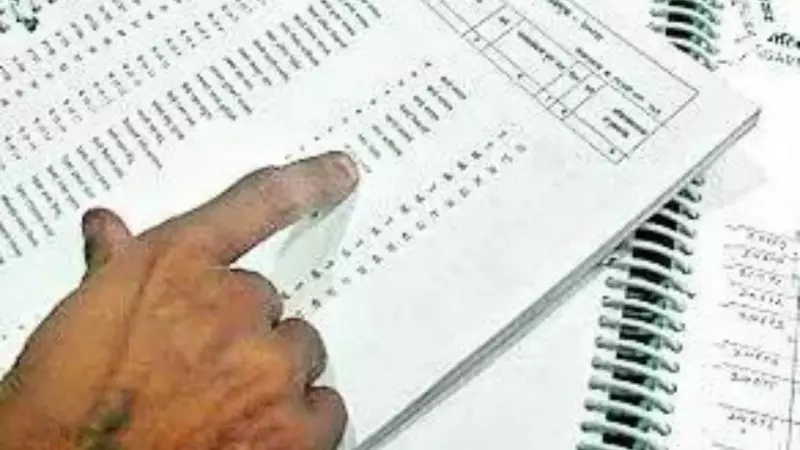
He pointed out that the Election Commission was refusing to accept state board examination admit cards as valid proof of age. These admit cards contain only the date of birth, unlike certificates issued after examination completion. Justice Dipankar Datta addressed this issue directly, stating that since the state education board does not include birth dates on final certificates, the commission must accept admit cards as legitimate documentary evidence.
Election Commission counsel Rakesh Dwivedi responded by assuring the court that necessary corrective measures would be implemented regarding this documentation issue.
Questioning the "Logical Discrepancy" Criteria
The bench engaged in detailed discussion about what constitutes a "logical discrepancy" in voter applications. Dwivedi explained that the commission flags instances where age gaps between voters and their fathers appear unusually small (15 years or less) or unusually large (more than 50 years), or where gaps between grandchildren and grandparents seem improbably narrow (less than 40 years).
The court expressed skepticism about these criteria. The bench observed pointedly, "We are not in a country where there is no child marriage," suggesting that real-world family structures in India might not always conform to these mathematical assumptions.
Political Representatives Voice Concerns
Several senior advocates representing Trinamool Congress politicians raised serious objections during the proceedings. Kapil Sibal, Shyam Divan, and Kalyan Banerjee collectively argued that the Election Commission was applying absurd and unreasonable standards when issuing "logical discrepancy" notices to voters.
Dwivedi defended the commission's approach, explaining that the notices simply require voters to produce relevant documents so that any genuine discrepancies in the electoral rolls can be properly corrected. He emphasized that the process aims to ensure accuracy and integrity in the voter registration system.
The Supreme Court's intervention comes at a critical juncture as West Bengal prepares for electoral processes. The court's directions seek to balance administrative efficiency with practical realities faced by millions of voters across the state.