

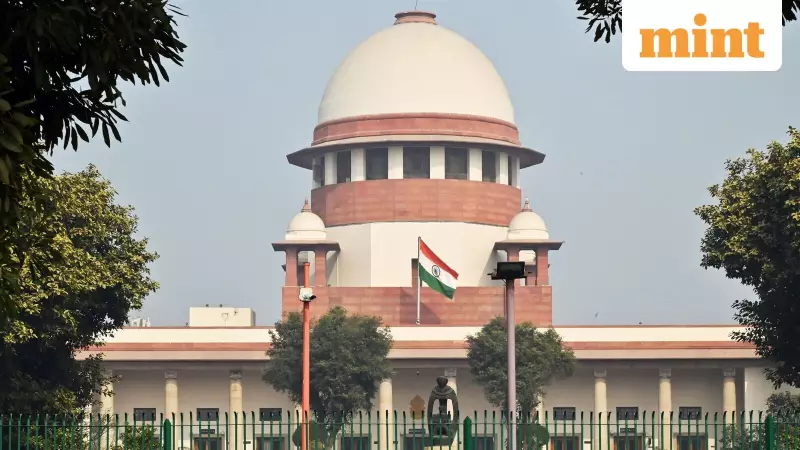
The Supreme Court issued a clear directive to the Election Commission on Monday. The court ordered the commission to display the names of individuals on the "logical discrepancies" list at specific government offices throughout West Bengal.
Public Display Mandated at Local Offices
The court specified that these lists must be shown at gram panchayat bhavans, block offices of talukas, and ward offices. This move aims to ensure transparency in the ongoing Special Intensive Revision of the electoral rolls.
Massive Scale of Discrepancies
A staggering 1.25 crore voters in West Bengal currently appear on this discrepancies list. The court noted this significant number during the hearing.

Logical discrepancies primarily involve issues with progeny linking against the 2002 voter list. Common problems include mismatches in parent names and age differences that seem improbable.
Specifically, discrepancies occur when the age difference between a voter and their parent is less than 15 years or exceeds 50 years. These inconsistencies have raised concerns about the accuracy of the voter database.
Opportunity for Voters to Respond
The three-judge bench, led by Chief Justice Surya Kant and including Justices Dipankar Datta and Joymalya Bagchi, emphasized that affected individuals must have a chance to respond.
The court directed that people likely impacted by the revision process should be allowed to submit their documents or raise objections. This provision aims to address potential errors fairly.
Establishing Submission Offices
To facilitate this process, the Supreme Court ordered the creation of dedicated offices for document submission and objections. These offices will be set up within the panchayat bhavans or block offices themselves.
The court further instructed the state government to provide adequate manpower to the State Election Commission. This staff will be deployed at these panchayat and block offices to manage the process efficiently.
"Every district shall meticulously comply with the directions issued by the ECI or the state government regarding staff deployment for smooth functioning," the bench stated firmly.
Ensuring Law and Order
Recognizing the potential for disruption, the court assigned specific responsibility to the West Bengal Director General of Police. The DGP must ensure no law-and-order problems arise during this exercise.
The top court explicitly obligated the police chief to guarantee that all related activities proceed smoothly and peacefully across the state.
Context of the Hearing
The Supreme Court was hearing multiple pleas that alleged arbitrariness and procedural irregularities in the ongoing Special Intensive Revision exercise in West Bengal. These petitions prompted the court's detailed intervention and specific directives.
The court's comprehensive order addresses both transparency concerns through public display and practical implementation through local offices and security measures.






