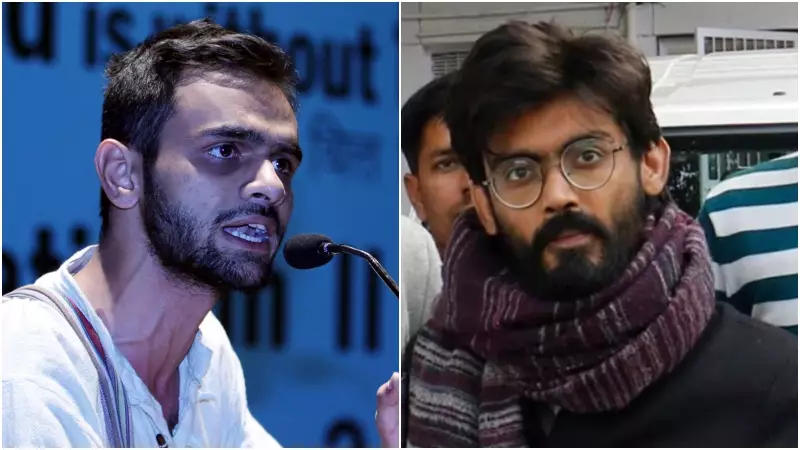
The Supreme Court of India's decision to reject bail for activists Umar Khalid and Sharjeel Imam, while granting it to five co-accused in the same Delhi violence conspiracy case, has ignited a fierce debate about justice, democracy, and political courage. This ruling, delivered on January 9, 2026, by a bench of Justices Aravind Kumar and N V Anjaria, is seen by critics not just as a judicial order but as a pivotal moment with profound implications for India's constitutional fabric.
A Troubling Judicial Precedent and Political Silence
While the ruling Bharatiya Janata Party (BJP) and its supporters hailed the order, a conspicuous silence from much of the mainstream political opposition—barring the Left parties—has drawn sharp criticism. Senior CPI(M) leader Brinda Karat, in a pointed commentary, argues that this hesitation to challenge what she terms "unjust court orders" allows the ruling regime to carry out political persecution without facing any real political cost. The case revolves around the application of the stringent Unlawful Activities (Prevention) Act (UAPA), which the court's interpretation has further expanded.
The bench accepted the prosecution's claim of prima facie involvement, stating Khalid and Imam were "on a qualitatively different footing" compared to others granted bail. This conclusion is deeply ironic, as highlighted by Karat, because a key factual detail undermines it: neither Khalid nor Imam was physically present in Delhi during the February 2020 violence. Imam was already in judicial custody since January 2020, arrested for an alleged inflammatory speech. Khalid was also elsewhere. Instead of strengthening their case for bail, the court perversely interpreted their absence as evidence of orchestration from afar, reversing earlier Supreme Court judgments that advocated a more balanced approach to bail under the UAPA.
The Dangerous Expansion of "Terrorism" Under UAPA
This ruling introduces alarming new dimensions to the already draconian UAPA. Under this interpretation, direct involvement in violence or provocation is no longer a prerequisite. The court's order suggests that participation in a road blockade, disruption of public spaces, or actions deemed to affect "economic stability" can now be treated as terrorism.
Such an expansive reading sets a dangerous precedent. It potentially criminalizes a wide range of democratic protests, including workers' strikes, Adivasis blocking roads against mining, or slum dwellers resisting illegal demolitions. This directly threatens the Constitution's "golden triangle"—Article 14 (right to equality), Article 19 (freedom of expression), and Article 21 (right to life and liberty). Critics warn it equips an authoritarian government to systematically equate dissent with sedition and crush opposition through fear and indefinite incarceration.
Context of the Delhi Violence and Selective Prosecution
The backdrop of this case is the widespread, largely peaceful, and secular opposition to the Citizenship Amendment Act (CAA) in late 2019 and early 2020. The BJP's demonization of these protests, particularly the sit-in at Shaheen Bagh, became a central plank of its campaign for the Delhi Assembly elections in February 2020. The party's subsequent electoral defeat, Karat argues, intensified its drive to sabotage and communalize the anti-CAA movement.
A stark contrast exists in who faced legal consequences. While Khalid, Imam, and other activists are prosecuted under UAPA, no First Information Report (FIR) was registered against BJP leaders like Anurag Thakur, Parvesh Verma, and Kapil Mishra despite video evidence of their inflammatory speeches. Former Delhi High Court Judge Justice S Muralidhar had criticized the police for this inaction, and he was transferred shortly after.
The violence erupted on February 23, 2020, following Kapil Mishra's ultimatum. Official figures state 53 people were killed, 41 of them Muslim, with Muslim properties disproportionately targeted. Questions about delayed police deployment, late curfew imposition, and even police complicity emerged. Yet, the official narrative pins the blame on a conspiracy by 18 individuals, mostly young students and activists. Of these 18 charged under UAPA, 16 are Muslims, including three women.
Lower courts have repeatedly slammed the Delhi Police for shoddy investigations and dubious witnesses in hundreds of related cases. This pattern of prosecution, combined with the Supreme Court's latest bail order, reinforces concerns about the UAPA being used not for national security but for prolonged incarceration of dissenting voices, especially from the Muslim community.
The article concludes with a powerful call to action, urging opposition parties—particularly the Congress—to break their silence. Karat warns that when injustice, especially with a communal color, is met with political hesitation—be it in the Delhi violence cases, Bhima Koregaon, or NewsClick—repression becomes normalized. The tragic custodial death of Father Stan Swamy, denied bail despite poor health, is cited as a grim example. The absence of a clear stand from secular opposition parties, the argument goes, fundamentally weakens the collective struggle to defend democracy and the Constitution.